Commercial LED Lighting for Large-Scale Projects: Stadiums, Hospitals, and New Development in Arlington and DFW
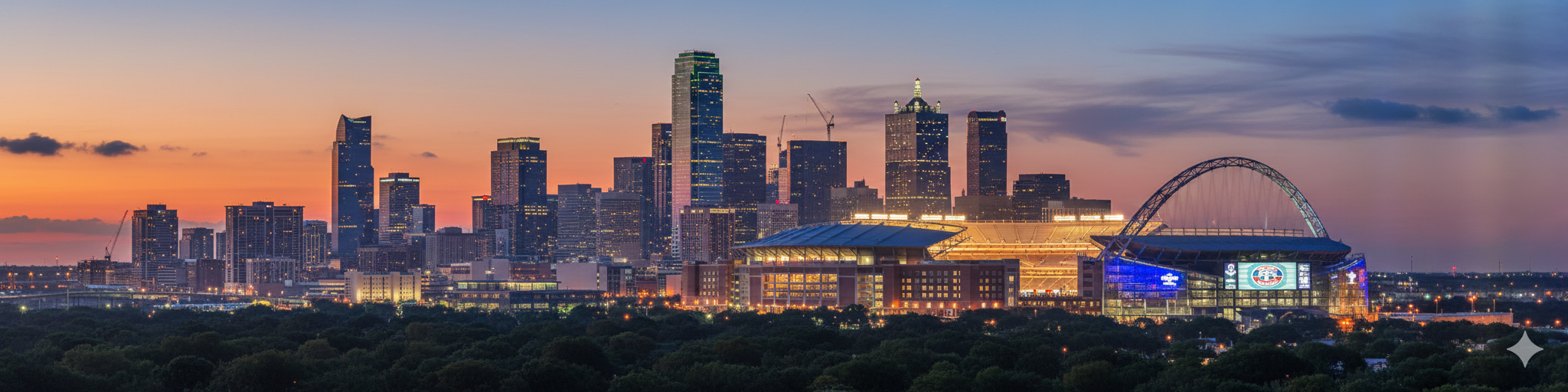
Arlington, Texas is in the middle of a construction boom that's reshaping the entire DFW metroplex. With a $4 billion entertainment district expanding around Globe Life Field and AT&T Stadium, plus dozens of mixed-use developments, new hotels, and healthcare facilities breaking ground, one thing is clear: these projects need professional LED lighting that matches their scale and ambition.
But here's the problem. Most LED lighting companies focus on simple retrofits and residential projects. When you're building a 500,000-square-foot mixed-use development, a 200-bed hospital expansion, or upgrading a municipal sports complex, you need a commercial LED lighting contractor who understands large-scale specifications, energy codes, and the unique demands of architectural lighting design.
In this guide, we'll break down everything property developers, facility managers, architects, and general contractors need to know about commercial LED lighting for large-scale projects in Arlington and the greater DFW area. You'll learn about costs, timelines, energy savings, and how to choose the right LED lighting partner for projects that can't afford mistakes.
⚡ Quick Answer: What You Need to Know
Commercial LED lighting for large-scale projects in Arlington and DFW typically costs $3.20 to $4.00 per square foot for installation, with potential energy savings of 40-75% compared to traditional lighting. Most projects achieve full ROI within 2-3 years through reduced energy and maintenance costs. Texas utility rebates can offset 30-50% of upfront costs.
Key Takeaways:
- Large-scale LED projects (hospitals, stadiums, commercial buildings) require specialized design and DLC-listed fixtures
- Arlington's $4B entertainment district expansion is driving demand for architectural LED lighting
- Energy savings of 40-75% are typical, with LED fixtures lasting 15-25 years
- Texas offers significant utility rebates (up to $249 per fixture) and federal tax deductions ($0.57-$1.13/sq ft)
- Professional photometric planning is essential for code compliance and optimal light distribution
Why Large-Scale Projects Require Specialized Commercial LED Lighting
There's a massive difference between installing LED bulbs in an office and designing a comprehensive lighting system for a 300,000-square-foot hospital or a 40,000-seat stadium. Large-scale commercial LED lighting projects involve complex variables that most residential or small-commercial installers simply aren't equipped to handle.
When you're working on new construction or major renovations in Arlington's booming development market, you need a lighting partner who understands photometric planning, Lighting Power Density (LPD) requirements, color temperature specifications for different environments, and integration with building automation systems. A hospital surgical suite requires completely different lighting specs than a hotel lobby or a stadium concourse.
For projects across the DFW metroplex, our team at Arlington LED Lights works directly with architects, engineers, and general contractors to deliver turnkey lighting solutions. We also coordinate with our regional partners including Dallas LED Lights, Fort Worth LED Lights, and Irving LED Lights to cover large-scale projects throughout North Texas.
The Technical Requirements Most Contractors Miss
Large commercial LED projects require attention to specifications that smaller jobs can overlook. Color temperature alone can make or break a project. Healthcare facilities typically need 4000K-5000K (cool white to brilliant white) for precision and alertness, while hotels and restaurants perform better at 2700K-3000K (warm white) to create inviting atmospheres.
Then there's the question of controls. Modern large-scale LED systems integrate daylight harvesting, occupancy sensors, scheduling, and dimming capabilities. For a mixed-use development with retail on the ground floor, offices above, and residential units on top, you need a lighting control system that can manage dramatically different requirements across zones—all while maximizing energy efficiency and meeting code.
Arlington's Development Boom: Where LED Lighting Demand Is Growing
Arlington isn't just growing—it's transforming. The city's entertainment district has become one of the most visited destinations in the United States, attracting over 16 million visitors annually. But beyond the stadiums, massive investment is flowing into every sector.
Major Projects Driving LED Lighting Demand
Entertainment District Expansion: The area around Globe Life Field and AT&T Stadium continues to grow. One Rangers Way, a $112 million luxury residential development, recently delivered its first units. The 888-room Loews Arlington Hotel and Convention Center opened in 2024. Each of these projects requires sophisticated architectural LED lighting that performs under intense public scrutiny.
Downtown Arlington Revitalization: The Nehemiah Company is leading a $200 million neighborhood transformation with multiple mixed-use projects. These developments combine residential units, retail space, restaurants, and parking structures—each zone demanding different lighting specifications and controls.
Infrastructure Investment: The $2.1 billion I-20 Southeast Connector Project represents the largest TxDOT investment in Fort Worth District history. Municipal LED street lighting and highway illumination at this scale requires specialized high-output fixtures designed for decades of reliable performance.
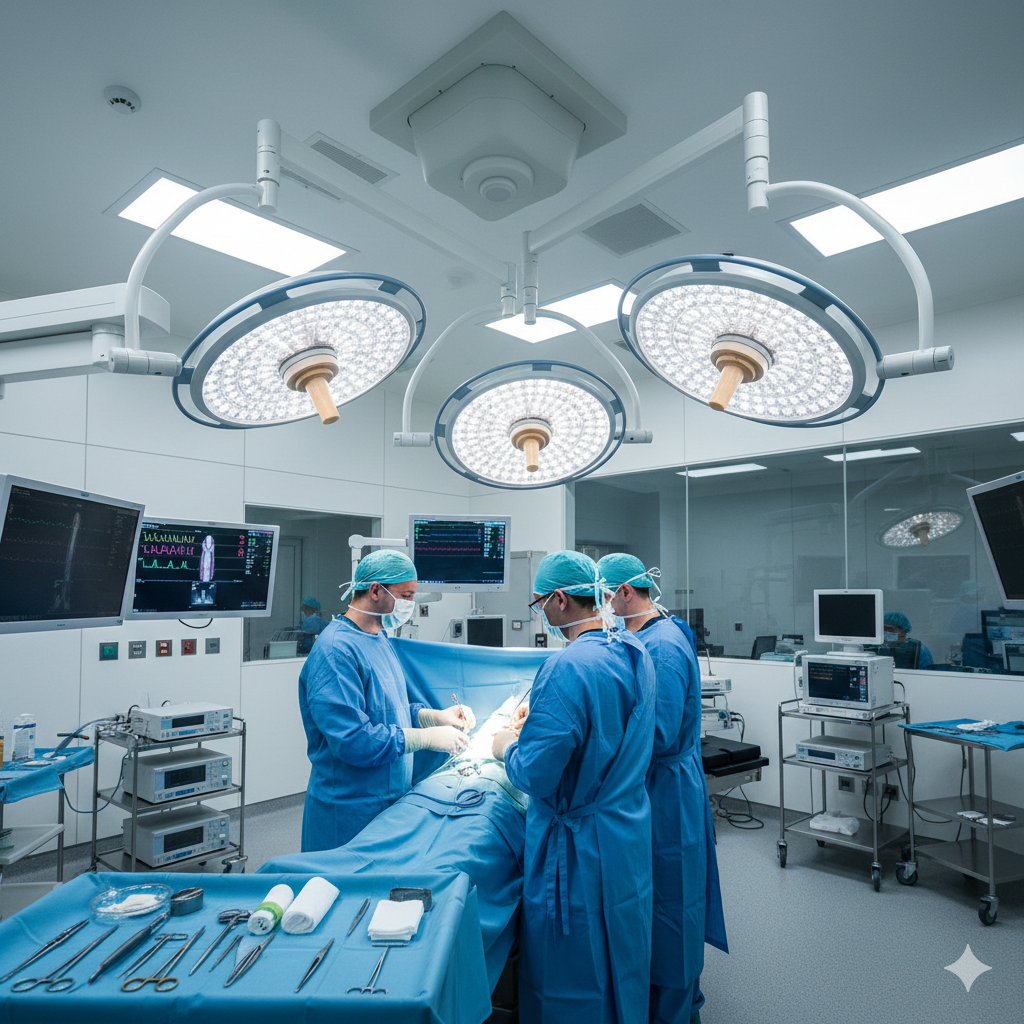
Healthcare Expansion: Medical facilities throughout Arlington and Tarrant County are expanding and upgrading. Hospital LED lighting requires exceptional color rendering (CRI 90+), precise controls, and compliance with strict healthcare facility codes.
For developers working on projects that span multiple cities in the metroplex, Texas LED Lights provides statewide coordination for large-scale commercial and municipal installations.
Types of Large-Scale Commercial LED Lighting Projects
Not all commercial LED projects are created equal. Here's how lighting requirements differ across the major project categories we see in Arlington and DFW.
Stadium and Sports Facility Lighting
Stadium LED lighting is among the most demanding applications. These systems must deliver uniform illumination across massive playing surfaces, eliminate flicker for HD broadcasting, provide instant-on capability (no warm-up time), and operate reliably in extreme temperatures. Color temperature typically runs at 5000K-5700K for optimal visibility and broadcast quality. High-intensity fixtures rated for mounting heights of 80-150+ feet require specialized engineering and installation expertise.
Healthcare Facility Lighting
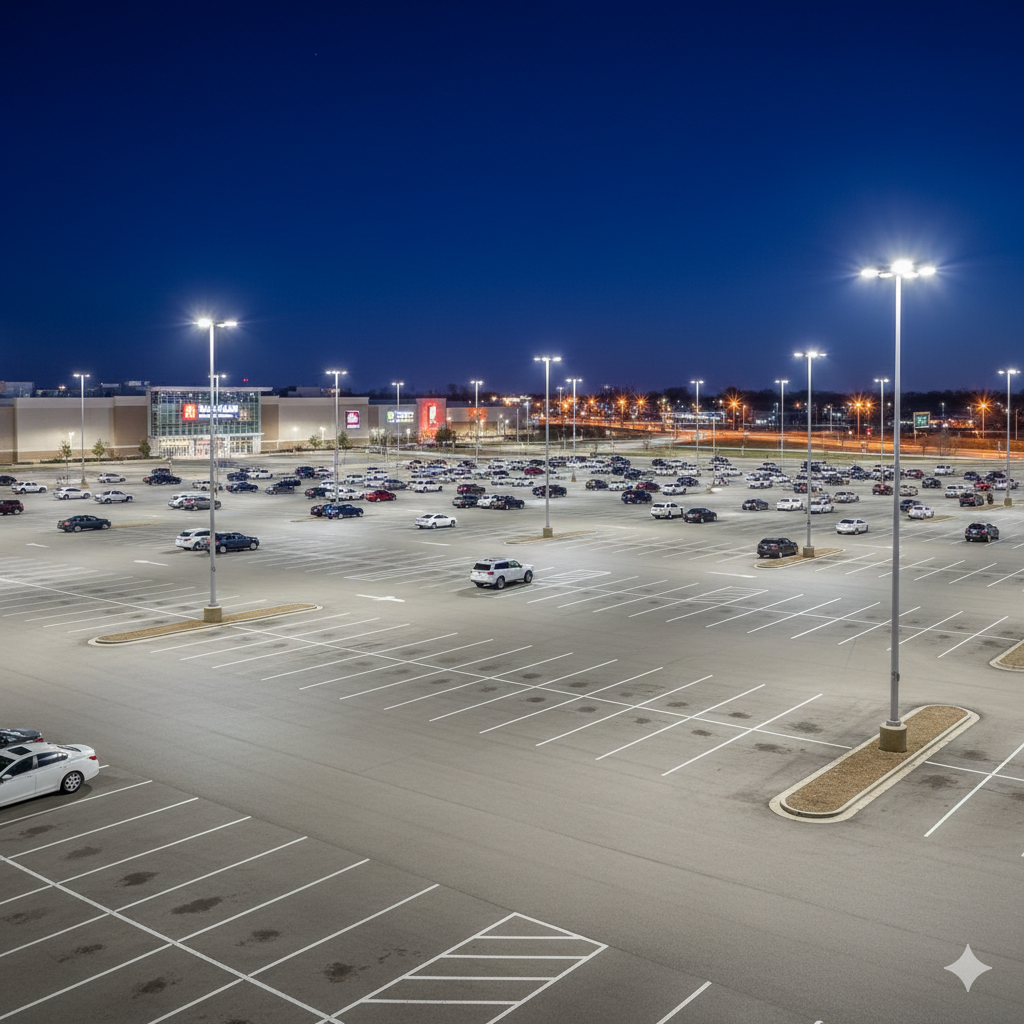
Hospitals and medical centers have unique requirements. Surgical suites need shadow-free, high-CRI lighting at 5000K. Patient rooms benefit from tunable white systems that can shift from energizing daylight tones to calming warm tones. Corridors require code-compliant emergency lighting with battery backup. Parking structures need vandal-resistant fixtures with excellent uniformity for patient and staff safety.
Mixed-Use and Multi-Family Development
Projects like One Rangers Way combine retail, residential, parking, and amenity spaces in a single development. Lighting design must create distinct atmospheres for each zone while maintaining architectural cohesion. Common areas, corridors, amenity spaces, and parking all require different fixture types, color temperatures, and control strategies.
Corporate Campus and Office Buildings
Modern office lighting focuses on human-centric design. LED panel lights and troffers at 3500K-4000K promote alertness and productivity. Daylight harvesting and occupancy sensors can reduce energy consumption by an additional 30-40% beyond the baseline LED savings. For multi-tenant buildings, sub-metering and zone controls allow individual tenants to manage their own lighting preferences and costs.
Hospitality: Hotels and Restaurants
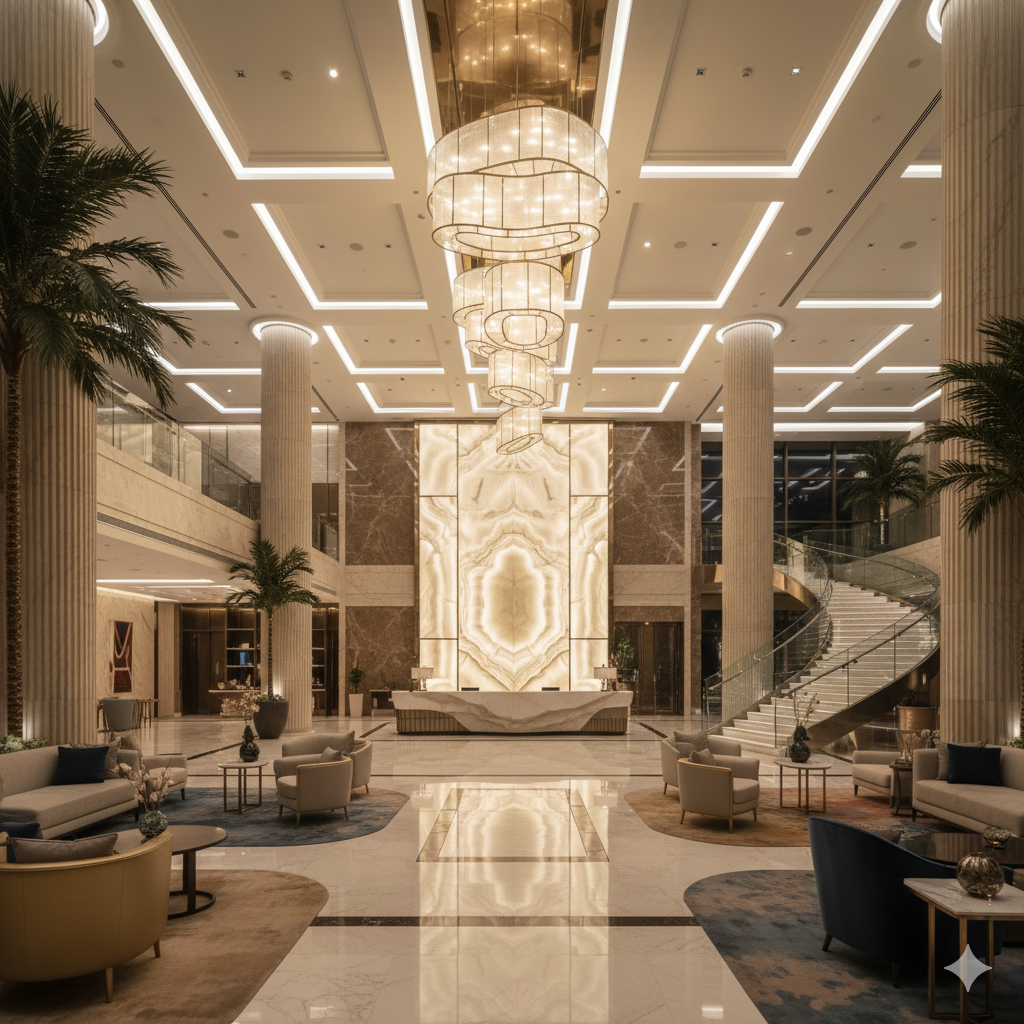
The hospitality sector demands aesthetic excellence. Lobby lighting, restaurant ambiance, conference facilities, and guest room comfort all require careful attention to color temperature, dimming capabilities, and architectural integration. For properties that want to make a dramatic visual statement, 360 Fiber Lighting offers premium fiber optic lighting systems, while American Starlight Ceilings creates stunning starlight ceiling installations that transform lobbies, spas, and entertainment venues.
Municipal and Infrastructure Lighting
City governments and public agencies are major drivers of large-scale LED adoption. Street lighting, park illumination, municipal building upgrades, and public facility improvements all benefit from LED's energy efficiency and reduced maintenance requirements. Municipal projects often qualify for the most substantial utility rebates and can access favorable financing through energy performance contracts.
LED vs. Traditional Lighting: Why Large-Scale Projects Are Making the Switch
The business case for LED lighting in large commercial projects is overwhelming. Here's how LED technology compares to traditional lighting systems across key performance metrics.
| Factor | Traditional (HID/Fluorescent) | Commercial LED | Advantage |
|---|---|---|---|
| Energy Consumption | Baseline (100%) | 25-40% of baseline | 60-75% savings |
| Lifespan | 10,000-20,000 hours | 50,000-200,000 hours | 5-15x longer |
| Maintenance Cost | Frequent lamp/ballast replacement | Minimal (10-15 year intervals) | 80-90% reduction |
| Warm-Up Time | 5-15 minutes (HID) | Instant on | Critical for stadiums |
| Dimming Capability | Limited or none | 0-100% smooth dimming | Full control |
| Color Rendering (CRI) | 60-80 | 80-98 | Superior quality |
| Heat Output | High (increases HVAC load) | Minimal | Lower cooling costs |
| Smart Controls Integration | Difficult/expensive | Native support | Future-ready |
| Rebate Eligibility | None | Up to $249/fixture | 30-50% cost offset |
| ROI Timeline | N/A | 2-3 years typical | Fast payback |
Commercial LED Lighting Costs: What to Expect for Large-Scale Projects
Let's talk real numbers. Commercial LED lighting costs vary significantly based on project scope, fixture quality, control system complexity, and installation requirements. Here's what you can expect in the Arlington and DFW market.
Cost Per Square Foot
The average cost for commercial LED lighting installation (including fixtures, controls, and labor) ranges from $3.20 to $4.00 per square foot for standard commercial spaces. This can increase significantly for specialized applications.
Typical Project Costs by Type:
- Small business retrofit (5,000-20,000 sq ft): $10,000 - $20,000
- Medium commercial building (20,000-100,000 sq ft): $40,000 - $120,000
- Large commercial/industrial (100,000+ sq ft): $150,000 - $500,000+
- Healthcare facilities: $5.00 - $8.00 per square foot (higher specs)
- Stadium/sports lighting: $500,000 - $2,000,000+ (venue-dependent)
- Parking structure: $2.50 - $4.00 per square foot
Individual Fixture Costs
LED fixture prices vary by type and quality:
- LED troffer/panel (2x4): $80 - $200
- High bay (warehouse/industrial): $150 - $400
- Parking lot/area light: $200 - $600
- Wall pack: $75 - $250
- Architectural/decorative: $150 - $500+
- Stadium flood light: $1,000 - $5,000+
- Installation labor: $50 - $350 per fixture
Rebates and Incentives That Offset Costs
Texas utilities and federal programs offer substantial incentives for commercial LED upgrades. For large-scale projects, these can offset 30-50% of total project costs.
💰 Available Incentives:
- Texas utility rebates: Up to $249 per DLC-listed fixture
- Section 179D tax deduction: $0.57 - $1.13 per square foot (up to $5/sq ft for comprehensive projects)
- Bonus depreciation: 100% first-year depreciation on qualifying equipment
- ENERGY STAR partner programs: Additional rebates on certified products
- Municipal/state programs: Varies by location and project type
For wholesale pricing on DLC-listed commercial LED fixtures, Wiedamark LED offers competitive wholesale LED solutions for contractors and large-scale project developers throughout Texas.
The Large-Scale LED Project Process: From Design to Installation
Professional commercial LED lighting projects follow a systematic process that ensures optimal results. Here's what to expect when working with an experienced lighting contractor.
Phase 1: Lighting Audit and Assessment
Every successful project starts with a comprehensive audit. For new construction, this means reviewing architectural plans and specifications. For retrofits, it involves documenting existing fixtures, measuring current light levels, assessing wiring conditions, and evaluating ceiling heights and mounting requirements. This phase identifies energy savings opportunities, rebate eligibility, and any infrastructure upgrades needed.
Phase 2: Photometric Design and Specification
Using CAD software and photometric modeling tools, lighting designers create detailed plans showing fixture placement, light distribution patterns, and illumination levels throughout the space. These plans ensure compliance with local codes and IESNA lighting standards. For large-scale projects, this phase is critical—mistakes at the design stage become expensive problems during installation.
Phase 3: Product Selection and Procurement
With the design finalized, the team selects specific fixtures that meet performance requirements while maximizing rebate eligibility. DLC (DesignLights Consortium) listed products are essential for utility rebates. For large projects, procurement coordination ensures all materials arrive on schedule and meet specifications.
Phase 4: Installation and Commissioning
Professional installation crews handle the physical work, coordinating with general contractors and other trades as needed. For occupied buildings, this often means working in phases or during off-hours to minimize disruption. After installation, commissioning ensures all fixtures and controls operate correctly and meet design specifications.
Phase 5: Documentation and Rebate Processing
Experienced contractors handle the paperwork for utility rebates and tax incentive documentation. This includes pre-approval applications, installation verification, and final rebate submissions. Proper documentation can recover 30-50% of project costs.
Specialty LED Lighting Applications for Unique Projects
Beyond standard commercial installations, certain projects require specialized LED lighting solutions.
Pool and Aquatic Facility Lighting
Hotels, resorts, fitness centers, and residential developments with pool amenities require specialized underwater and poolside lighting. Premium Pool Lighting provides commercial-grade LED pool lighting solutions designed for safety, aesthetics, and long-term durability in chlorinated and saltwater environments.
Fiber Optic and Specialty Architectural Lighting
For projects demanding dramatic visual impact—casino floors, high-end retail, luxury hospitality, entertainment venues—fiber optic lighting creates effects impossible with conventional LED. 360 Fiber Lighting designs and installs premium fiber optic systems for the most demanding architectural applications.
Starlight Ceilings and Immersive Environments
Create unforgettable spaces with starlight ceiling installations. These fiber optic systems simulate night skies and can be customized for home theaters, spa facilities, hotel lobbies, restaurants, and entertainment venues. American Starlight Ceilings specializes in these transformative installations.
Modular Building and Prefab Structure Lighting
The modular construction industry is booming, and these structures need integrated lighting solutions designed for prefab installation. America Modular Buildings and Dallas Modular Structures work with developers on modular projects that incorporate LED lighting from the design phase.
Frequently Asked Questions: Commercial LED Lighting for Large Projects
How much does commercial LED lighting cost per square foot?
Commercial LED lighting installation typically costs $3.20 to $4.00 per square foot for standard applications. Healthcare facilities and specialized spaces can run $5.00 to $8.00 per square foot due to higher specification requirements. These costs include fixtures, controls, and installation labor.
What is the ROI on commercial LED lighting upgrades?
Most commercial LED projects achieve full ROI within 2-3 years through energy savings (40-75% reduction) and reduced maintenance costs (80-90% reduction). When utility rebates and tax incentives are factored in, payback periods can drop to 12-18 months for qualifying projects.
What rebates are available for LED lighting in Texas?
Texas utilities offer rebates up to $249 per DLC-listed LED fixture. Federal Section 179D tax deductions provide $0.57 to $1.13 per square foot for qualifying lighting upgrades, with higher deductions available for comprehensive energy efficiency projects. Many projects qualify for 100% bonus depreciation on equipment costs.
How long do commercial LED lights last?
Quality commercial LED fixtures are rated for 50,000 to 200,000 hours of operation—that's 10 to 25+ years under typical commercial use. This dramatically reduces maintenance costs and replacement frequency compared to traditional lighting.
What is DLC-listed lighting and why does it matter?
The DesignLights Consortium (DLC) certifies high-efficiency commercial LED products. DLC-listed fixtures meet strict performance standards and are required for most utility rebate programs. Using DLC-listed products ensures quality while maximizing available incentives.
How long does a large-scale LED installation take?
Timeline varies significantly by project scope. A 20,000 square foot office retrofit might take 1-2 weeks. A 200,000 square foot industrial facility could require 4-8 weeks. Stadium and healthcare projects often run 3-6 months due to complexity and scheduling constraints. New construction timelines integrate with overall project schedules.
What color temperature should I use for commercial spaces?
Color temperature depends on application. Hospitality and restaurants typically use 2700K-3000K (warm white). Offices and retail perform well at 3500K-4000K (neutral to cool white). Healthcare, industrial, and stadium applications often require 4000K-5000K (cool to brilliant white) for optimal visibility and alertness.
Can LED lighting integrate with building automation systems?
Yes. Modern commercial LED systems support integration with building automation through protocols like DALI, 0-10V dimming, DMX, and wireless controls. This enables daylight harvesting, occupancy-based control, scheduling, and centralized management—adding an additional 20-40% energy savings beyond baseline LED efficiency.
Do you handle projects outside Arlington?
Absolutely. Our network covers the entire DFW metroplex and beyond. We coordinate with Dallas LED Lights, Fort Worth LED Lights, Plano LED Lights, and Texas LED Lights to serve large-scale projects throughout the region and state.
What should I look for in a commercial LED lighting contractor?
Look for proper licensing and insurance, documented experience with projects similar to yours, knowledge of DLC-listed products and rebate programs, in-house design capabilities including photometric planning, and references from completed large-scale installations. A qualified contractor should offer a comprehensive audit and detailed proposal before any work begins.
Ready to Discuss Your Large-Scale LED Project?
Whether you're developing a new mixed-use project, upgrading a healthcare facility, or planning a stadium renovation, our team has the expertise to deliver commercial LED lighting that performs. Get a free consultation and project assessment.
Or visit us online:
Serving Arlington, Dallas, Fort Worth, Irving, Plano, and all of North Texas
Conclusion: Positioning Your Project for Success
Arlington's development boom isn't slowing down. From the entertainment district's continued expansion to downtown revitalization projects, healthcare facility upgrades, and municipal infrastructure improvements, the demand for professional commercial LED lighting has never been higher.
Large-scale projects require more than basic installation—they need partners who understand architectural specifications, energy codes, rebate programs, and the unique demands of stadiums, hospitals, hotels, and mixed-use developments. The right LED lighting contractor delivers not just fixtures and installation, but comprehensive solutions that perform for decades while maximizing energy savings and incentive capture.
If you're planning a large-scale project in Arlington or anywhere in the DFW metroplex, start the conversation early. Professional lighting design integrated from the beginning of your project delivers better results than retrofit solutions added as an afterthought. Contact our team at (702) 738-2218 to discuss your project requirements and discover how strategic LED lighting can enhance your development's performance, efficiency, and appeal.