LED Video Walls in Arlington, TX: The Complete Guide for Businesses, Churches & Venues
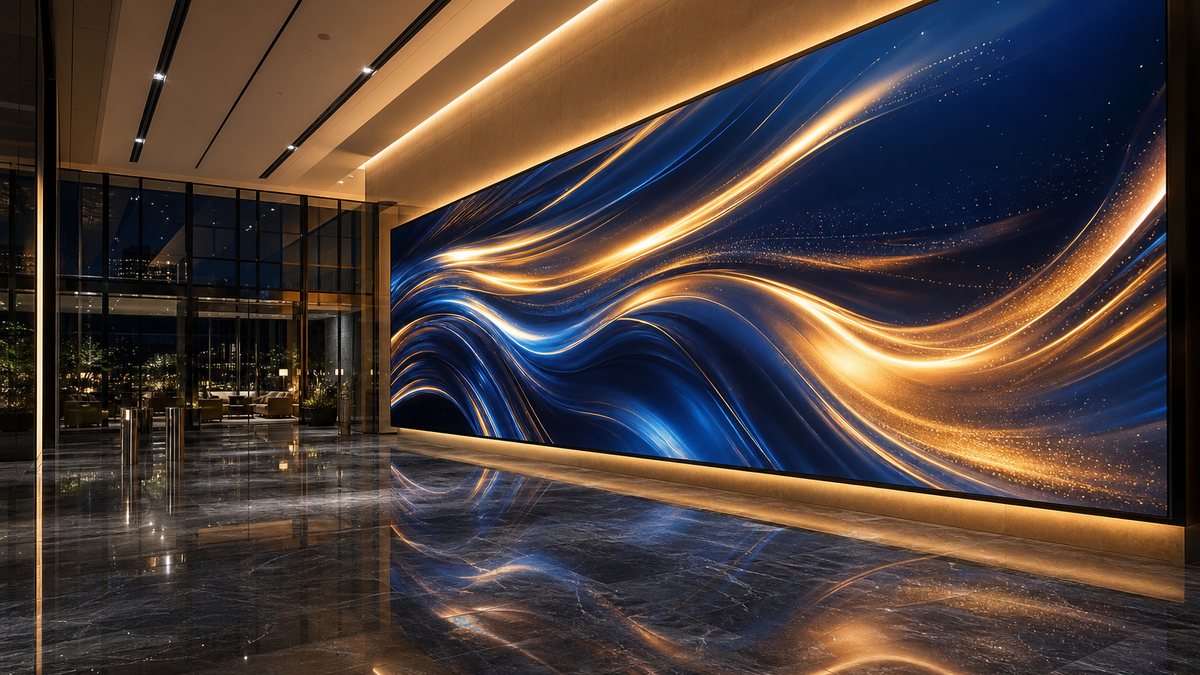
LED video walls in Arlington are showing up everywhere people gather: corporate lobbies, church sanctuaries, hotel ballrooms, restaurants, showrooms, and the sports and entertainment venues that define the city. A well-designed video wall is bright enough for daylight, seamless from edge to edge, and big enough to become the centerpiece of a space. A poorly planned one is too dim, too pixelated, or too hard to run.
This guide explains how LED video walls work, how to choose the right pixel pitch and size, the differences between indoor and outdoor displays, what goes into installation and control, and how to plan a project that looks great for years. Whether you are a facility manager, pastor, hotel operator, or business owner, you will know the right questions to ask before you buy.
An LED video wall is a large display built from modular LED panels that fit together into one seamless screen.
- Pixel pitch (distance between pixels) sets how close viewers can stand: smaller pitch for close viewing, larger for distance
- Indoor walls suit lobbies, churches, conference rooms and ballrooms; outdoor walls need weather-rated, high-brightness panels
- No bezels: unlike tiled LCD screens, LED walls have no visible seams
- Any size or shape: modular panels can form wide, tall, curved or custom layouts
- Planning matters: structure, power, processing and content control are as important as the panels
- Pricing: every wall is quoted to its size, pitch, location and installation needs
How LED video walls work
An LED video wall is made of cabinets or panels, each covered in tiny red, green, and blue LEDs that together form pixels. The panels mount to a frame or structure and connect to each other with power and data cables. A video processor takes the signal from a computer, media player, camera, or switcher and maps it across all the panels so they act as one screen.
Because the LEDs themselves emit light, LED walls are much brighter than projectors and do not wash out in bright rooms. And because the panels fit edge to edge, there are no black lines between screens like on LCD video walls.
Key parts of a video wall system
- LED panels or cabinets: the display modules themselves
- Mounting structure: wall mount, freestanding frame, flown rigging, or custom structure
- Video processor: scales and maps content to the exact resolution of the wall
- Sources and control: media players, computers, cameras, and the software or switcher that chooses what shows
- Power and data: dedicated circuits and signal cabling planned for the full wall
Choosing the right pixel pitch
Pixel pitch is the distance in millimeters between the centers of neighboring pixels. It is the single biggest factor in image sharpness and one of the biggest factors in cost. A smaller pitch means more pixels in the same area, a sharper picture up close, and a higher price. A larger pitch works well when viewers are farther away.
A common rule of thumb is that the minimum comfortable viewing distance in feet is roughly the pixel pitch in millimeters multiplied by about eight to ten. The right answer depends on the content too: fine text and spreadsheets need a tighter pitch than video and graphics.
| Pixel pitch | Typical closest viewing | Common uses |
|---|---|---|
| Under 1.5 mm | Very close, a few feet | Boardrooms, control rooms, premium retail |
| 1.5 to 2.5 mm | Roughly 12 to 25 feet | Corporate lobbies, conference rooms, broadcast sets |
| 2.5 to 4 mm | Roughly 20 to 40 feet | Churches, ballrooms, event spaces, restaurants |
| 4 to 6 mm | Roughly 35 to 60 feet | Large auditoriums, gyms, rental and staging |
| 6 mm and up | Long distances | Outdoor displays, stadiums, signage and billboards |
Measure from the closest seat or standing spot, not the middle of the room. Choose the pitch for that closest viewer, then size the wall so people at the back can still read the content.
Indoor vs outdoor LED displays
Indoor and outdoor walls look similar but are built very differently.
- Indoor walls use finer pixel pitches and moderate brightness suited to controlled lighting. They are lighter and often have front access for service in tight spaces.
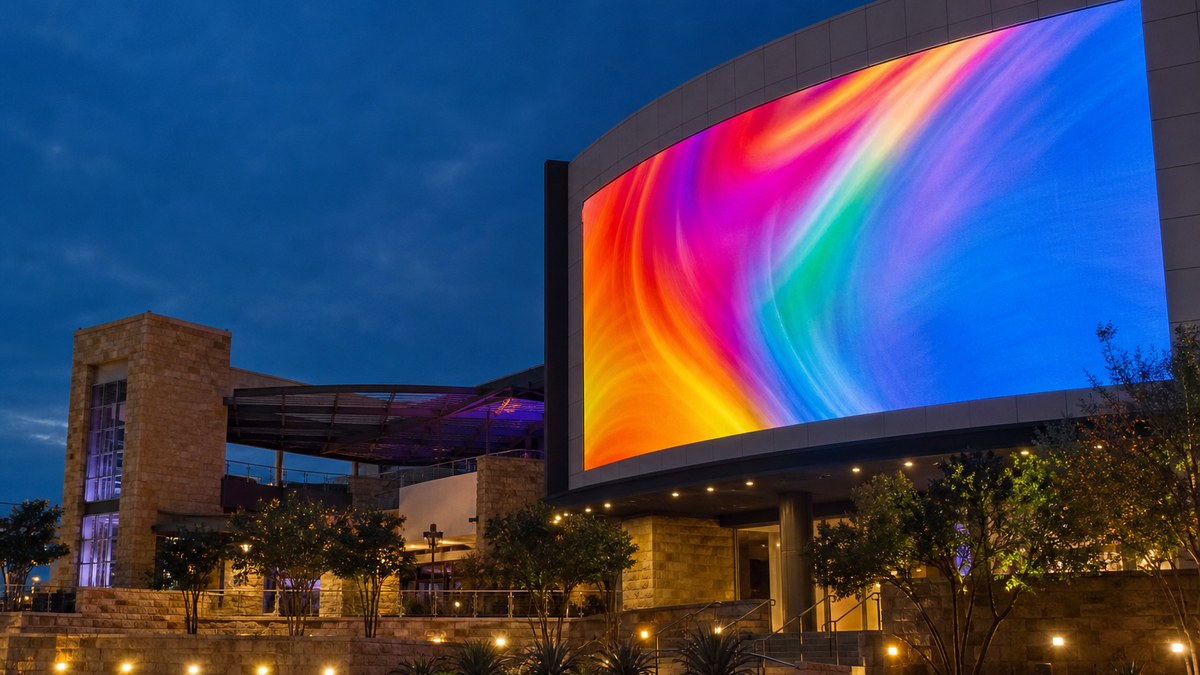
- Outdoor walls need much higher brightness to compete with Texas sun, weather-sealed cabinets rated against rain and dust, and cooling designed for summer heat. They are usually larger pitch and mounted on engineered structures.
There is also a middle category: semi-outdoor displays for storefront windows, covered patios, and concourses where panels face bright light but are protected from direct rain.
Where Arlington businesses use video walls
Corporate lobbies and offices
A lobby video wall welcomes visitors, showcases the brand, displays dashboards and news, and makes an immediate impression. In conference rooms, LED walls replace projectors with a brighter, sharper picture that works with the lights on.
Churches and houses of worship
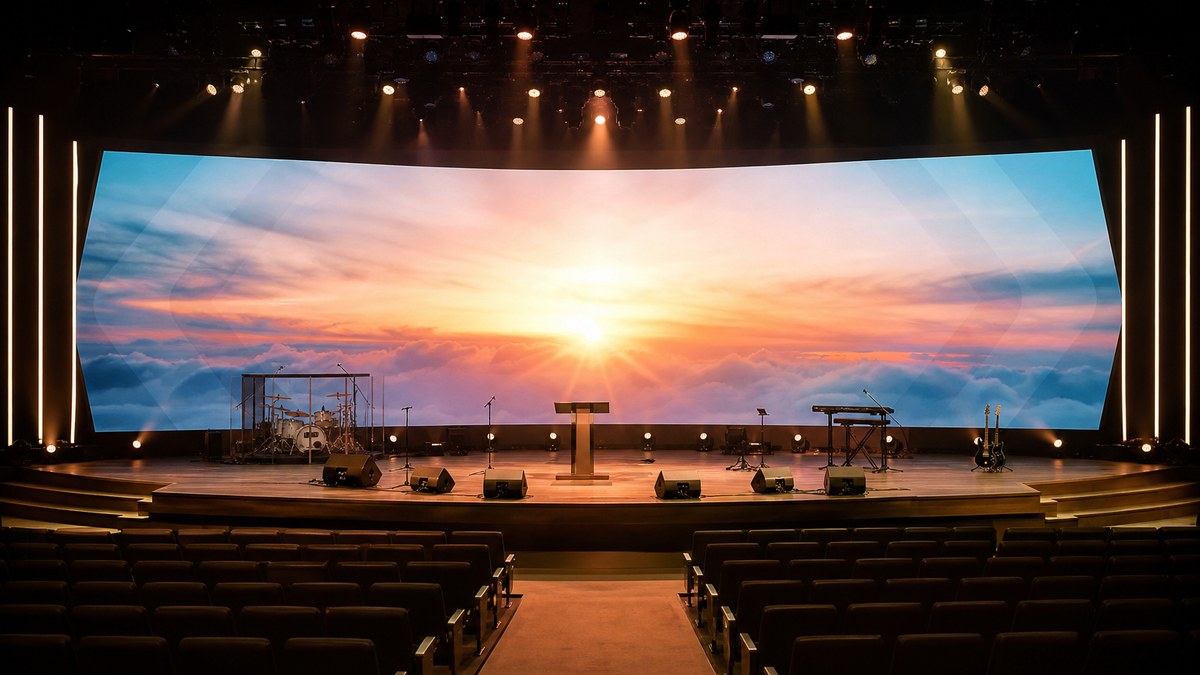
Churches across Arlington use LED walls for lyrics, sermon notes, video, and live camera feeds. LED walls stay bright in sanctuaries with windows, and they can be sized to fill the stage without the seams of multiple screens.
Hotels, ballrooms and event spaces
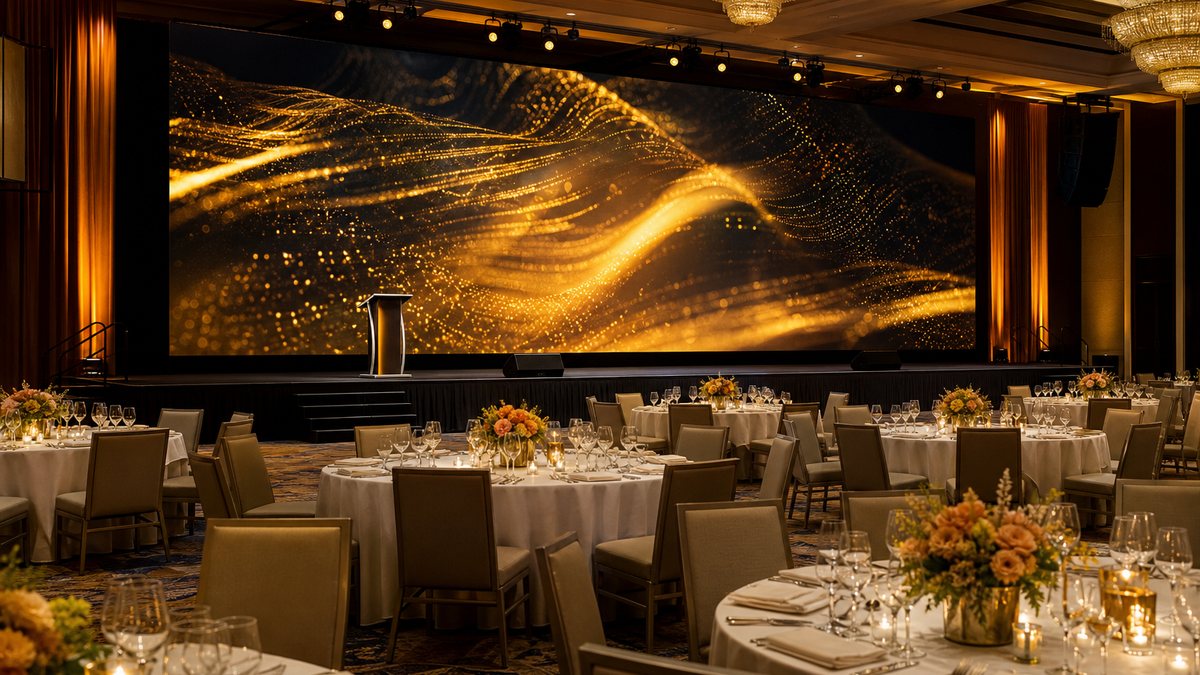
With conventions and events near the Entertainment District, hotel ballrooms and event spaces use video walls for presentations, sponsor branding, weddings, and galas. A permanent wall can replace rented screens and become a revenue-generating amenity. See our guide to large-scale commercial lighting for how displays fit into full hotel lighting programs.
Restaurants, bars and retail
Sports bars and restaurants use LED walls for games and events. Retailers and showrooms use them for product launches, promotions, and eye-catching window displays.
Sports and entertainment venues
Venues use LED for scoreboards, ribbon boards, concourse displays, and exterior screens. These installations require careful structural, power, and content planning, and often integrate with the venue's lighting and sound systems.
Schools and universities
Gyms, auditoriums, and student centers use LED walls for events, announcements, and athletics.
Video walls for Arlington's event economy
Few cities of Arlington's size host as many major events. Game days, concerts, conventions, and tournaments bring huge crowds to the Entertainment District and the convention center, and the hotels, restaurants, bars, and meeting spaces around them all compete for attention. Displays are one of the most flexible tools these properties have. A single wall can show a keynote in the morning, sponsor branding at lunch, and the big game at night. For businesses that serve visitors, a bright, well-placed display turns foot traffic into customers. For churches, schools, and community spaces, it makes every gathering easier to follow and more engaging.
What goes into a video wall project
- Site review. We measure the space, viewing distances, ambient light, wall construction, and available power and data.
- Design. Pixel pitch, size, aspect ratio, and resolution are chosen to fit the space and the content. Structural mounting and service access are planned.
- Proposal. A clear scope covering panels, structure, processing, control, installation, and training.
- Structure and power. Mounting frames are built or installed, and dedicated electrical circuits run as needed.
- Installation. Panels are hung, aligned, and connected. Calibration evens out brightness and color across the wall.
- Processing and control. Video processors, media players, and control systems are configured so staff can run the wall easily.
- Training and service. Your team learns to operate the system, and service plans keep it running.
Planning a display for your space?
Tell us where the wall will go and how it will be used. We will recommend the right size and pixel pitch and prepare a project-specific proposal.
Content and control: making the wall easy to run
The best video wall is one your staff actually uses. Control options range from simple to sophisticated:
- Media players that run scheduled playlists for lobbies and retail
- Presentation inputs for laptops and wireless sharing in conference rooms
- Live production with cameras and switchers for churches and events
- Digital signage software to update content remotely across locations
- Touch panels or simple buttons so anyone can switch sources
Content should be created at the wall's native resolution and aspect ratio. A 16:9 video stretched across a wide wall looks distorted, so planning content early is part of good design.
Structure, power and installation details
Video walls are heavy and draw real power, so the installation has to be engineered properly:
- Structural support: walls must carry the weight, or a freestanding frame is used. Large or flown displays may need engineering review.
- Service access: front-serviceable panels allow installation flush to a wall; rear-service designs need space behind.
- Electrical: dedicated circuits sized for peak brightness, installed by licensed electricians.
- Heat and ventilation: especially important in enclosed installations and outdoor cabinets.
- Cable management: clean, labeled power and data runs make future service faster.
Maintenance and lifespan
LED video walls are built for long service lives, with panels commonly rated for tens of thousands of hours to half brightness. Brightness usually runs well below maximum in normal use, which extends life further. Keeping spare modules on hand makes it easy to swap out any failed module and keep the wall looking perfect. Periodic cleaning, checking connections, and recalibrating brightness and color keep the wall consistent over time. Outdoor displays also need their seals, cooling, and structure checked, especially after storms.
What affects the cost of an LED video wall
Every wall is quoted individually. The biggest cost drivers are:
- Size: total square footage of panels
- Pixel pitch: finer pitch means more LEDs and higher cost
- Indoor or outdoor: outdoor panels need higher brightness and weatherproofing
- Structure: simple wall mount vs freestanding, curved, or flown installations
- Processing and control: from a simple media player to full live production
- Electrical and site work needed to support the wall
We help you balance these factors so the wall looks right for your space and budget, rather than overspending on a pitch that viewers will never notice.
Common mistakes when buying a video wall
- Choosing pitch by price alone. Too coarse a pitch looks pixelated up close; too fine a pitch wastes budget in large rooms where no one sits near the screen.
- Ignoring the room's lighting. Windows and downlights aimed at the wall reduce contrast. Plan the lighting with the display.
- Forgetting the structure. Drywall alone rarely carries a large wall. Structural support and service access must be planned early.
- Skipping the processor. A quality video processor makes the difference between crisp content and scaling problems.
- No plan for content. A wall without the right content and simple controls ends up switched off. Decide who runs it and how.
- No spares. Ordering spare modules with the original batch keeps replacements matched in color and brightness.
Permanent install vs rental displays
Event producers often rent LED panels for one-off shows, and rentals make sense for occasional use. But if a church, hotel, school, or business uses a screen every week, a permanent installation usually wins. It is always ready, it is designed and calibrated for the room, it avoids repeated setup and teardown labor, and it becomes part of the building's identity. Permanent walls can also be integrated with house lighting, sound, and control systems, which rentals rarely are. Many hotels and event venues find that a permanent wall pays for itself by replacing rentals and adding value to every event booked in the space.
Video walls and lighting: designing them together
A video wall does not exist in isolation. Room lighting that hits the screen reduces contrast, while a very dark room can make a bright wall uncomfortable to watch. The best results come from designing the video wall and the room lighting together: controlled downlights and dimming near the display, architectural accent lighting that frames it, and scenes that switch the room between presentation, event, and everyday modes. Because Arlington LED Lights handles both commercial lighting and video walls, we can plan the two as one system.
Frequently Asked Questions
What is an LED video wall?
What pixel pitch do I need for my video wall?
Are LED video walls better than projectors?
How much does an LED video wall cost in Arlington?
Can LED video walls be installed outdoors in Texas?
How long do LED video walls last?
Can a church install an LED video wall?
How is a video wall controlled?
Do you install video walls outside Arlington?
Let's design your video wall
Request a consultation and we will follow up to discuss your space, content, and timeline.
Related
Our DFW lighting network: Dallas LED video walls and commercial lighting, Fort Worth LED lighting, Irving LED lighting, Plano LED lighting, statewide Texas LED lighting, wholesale LED components, LED signs and message centers, fiber optic starlight ceilings, 360° fiber optic lighting, modular building solutions, and Dallas modular structures.