Lighting Installation in Arlington, TX: A Step-by-Step Guide to Commercial LED Installs
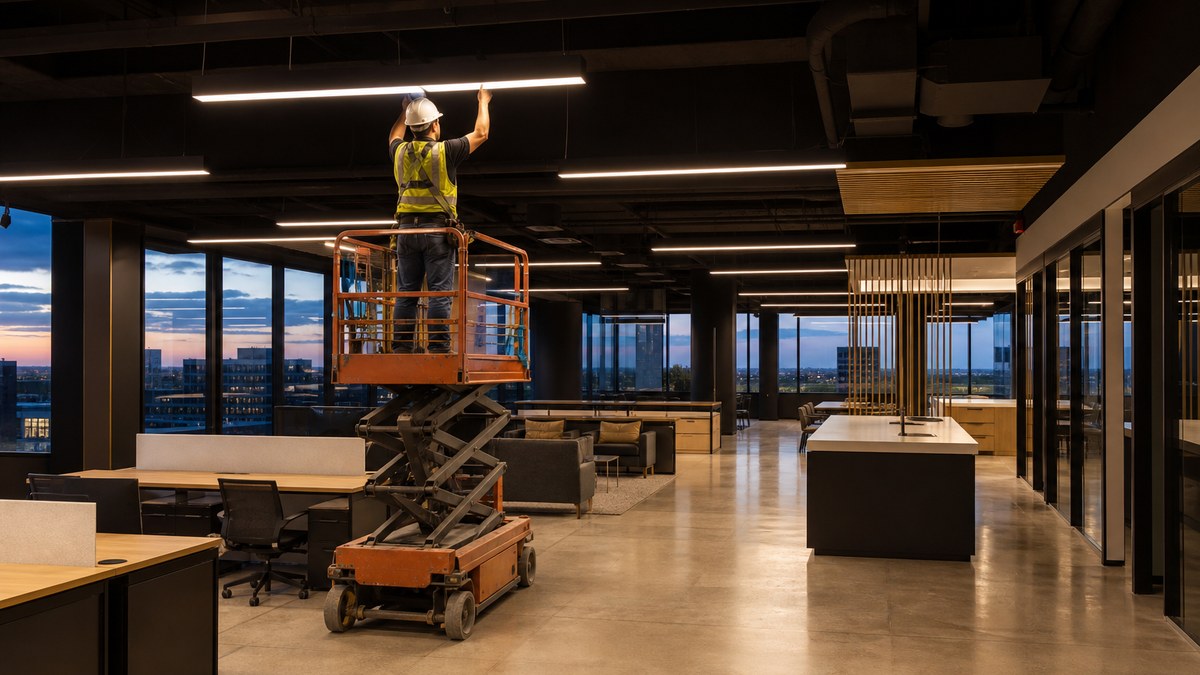
Lighting installation in Arlington is about much more than hanging fixtures. Whether you are fitting out a new office near the Entertainment District, retrofitting a warehouse off I-20, relighting a retail center, or replacing failing parking lot poles, a good commercial LED installation starts with a plan, follows code, works around your operations, and ends with a space that is brighter, more comfortable, and easier to maintain.
This guide walks Arlington business owners, facility managers, and property managers through the complete process: the types of lighting installation projects, what happens at each step, how permits and energy code fit in, how to choose fixtures and controls for each type of space, how to keep your business running during the work, and what to look for when you search for "LED light installation near me." By the end, you will know exactly what a professional installation should include and which questions to ask before you sign a proposal.
Professional commercial lighting installation in Arlington, TX follows a clear sequence: site survey, lighting design, a project-specific proposal, permits, scheduled installation, controls programming, and a final walkthrough.
- Three project types: retrofit (new LED in existing fixtures), fixture replacement, and new construction or tenant finish-out
- Licensed electricians should perform the wiring, and most commercial electrical work requires a permit from the City of Arlington
- Energy code may require lighting controls such as occupancy sensors and dimming when a significant amount of lighting is replaced
- After-hours and phased scheduling keeps offices, stores, and warehouses operating during the install
- Design first: light levels, color temperature, glare, and controls matter as much as the fixtures
- Pricing: every installation is quoted to its scope in a project-specific proposal
What counts as lighting installation?
"Lighting installation" covers a wide range of work, and the right approach depends on what you are starting with. Most commercial projects in Arlington fall into one of three categories.
1. LED retrofits
A retrofit keeps the existing fixture housings and replaces the light source and internal components with LED. Common examples include converting fluorescent troffers with LED retrofit kits, swapping metal halide lamps in high bays, and upgrading can lights with LED modules. Retrofits are often the fastest way to modernize a building because ceilings stay intact and disruption is limited. They work best when the existing housings are in good condition and well placed.
2. Fixture replacement
When housings are old, damaged, poorly positioned, or simply the wrong style for the space, replacing the whole fixture is the better choice. New LED fixtures offer better optics, cleaner looks, integrated sensors, and longer service life. Warehouses moving from older high bays to LED high bays, retail stores upgrading to track and accent lighting, and parking lots replacing pole heads are typical fixture-replacement projects.
3. New construction and tenant finish-out
New buildings and interior finish-outs give the most freedom. Lighting can be designed from scratch around the floor plan, ceiling heights, furniture, and how the space will be used. In Arlington's growing commercial corridors, finish-outs for offices, medical suites, restaurants, and retail are a major share of lighting installation work. This is where layout, controls, and architectural details make the biggest difference.
| Project type | Best when | Disruption | Design freedom |
|---|---|---|---|
| LED retrofit kits | Housings are sound and layout works | Low | Limited |
| Fixture replacement | Housings are old, damaged or poorly placed | Moderate | Good |
| New construction / finish-out | Space is being built or remodeled | Part of the build | Full |
| Exterior and site lighting | Parking, facades, signage and walkways | Usually after hours | Good |
| Controls-only upgrade | Fixtures are fine but waste energy | Low | Moderate |
The lighting installation process, step by step
A professional installation follows a predictable path. Knowing the steps helps you plan, budget, and hold your contractor accountable.
- Site survey. An installer walks the property, counts and identifies existing fixtures, measures ceiling heights and mounting conditions, checks the electrical panels and circuits, notes problem areas such as dark spots or glare, and asks how each space is used and when.
- Lighting design. Target light levels are set for each area based on the tasks performed there. Fixture types, layout, color temperature, color rendering, and controls are chosen. For larger or more sensitive spaces, a photometric layout shows how light will fall on floors, shelves, and work surfaces before anything is ordered.
- Proposal. A clear, project-specific proposal lists fixtures and quantities, controls, labor, lifts or equipment, permits, disposal of old lamps and fixtures, schedule, and any incentive paperwork.
- Permits and submittals. The licensed electrical contractor pulls the required permits and prepares any energy code documentation.
- Procurement. Fixtures, drivers, sensors, and controls are ordered, with lead times confirmed so the installation date is realistic.
- Installation. Crews install fixtures area by area, often after hours or in phases. Old lamps and ballasts are removed and recycled or disposed of properly.
- Controls programming. Occupancy sensors, daylight sensors, timers, and dimming scenes are set up and tuned to how you actually use the space.
- Inspection and walkthrough. The city inspector signs off where required, and you walk the site with the installer to confirm every area works, looks right, and is labeled.
- Closeout. You receive fixture specs, warranty information, control settings, and a simple guide for staff.
Ask for the fixture schedule in writing before you approve the proposal. It should list each fixture by model, wattage, color temperature, and location so you can compare proposals line by line instead of just comparing totals.
Permits, inspections and energy code in Arlington
Commercial lighting installation involves electrical work, and electrical work in Arlington is regulated. The City of Arlington's Planning and Development Services department handles building and electrical permits and inspections. Requirements depend on the scope: a simple lamp swap is very different from rewiring circuits, adding new fixtures, or finishing out a suite. Always confirm current requirements with the city or a licensed electrical contractor before work begins.
Why permits matter
- Safety: inspections confirm wiring, grounding, circuit loading, and connections are done correctly.
- Insurance and leases: landlords and insurers often require documentation that electrical work was permitted and inspected.
- Resale and refinancing: unpermitted work can create problems during inspections, sales, or appraisals.
- Incentives: some utility incentive programs ask for proof that work was completed to code.
Energy code and lighting controls
Texas applies a statewide energy code to commercial buildings, and local jurisdictions adopt and amend specific editions. Modern energy codes do more than limit lighting power. When a meaningful portion of the lighting in a space is replaced or added, they can require controls such as occupancy or vacancy sensors, automatic shutoff, daylight-responsive controls near windows and skylights, and multi-level dimming. Exterior lighting usually has its own rules for automatic shutoff and reduced output after hours.
The practical takeaway: plan controls as part of the installation, not as an afterthought. A qualified installer will tell you which controls are required for your scope and which are optional upgrades that improve comfort and energy savings.

Choosing fixtures for each type of space
Good lighting installation starts with the right fixture for the job. Here is how lighting needs differ across the spaces Arlington businesses operate in.
Offices and conference rooms
Offices need even, glare-controlled light that is comfortable for screen work. LED flat panels, troffers with good diffusers, and linear pendants are common choices. Neutral color temperatures around 3500K to 4000K feel clean without being harsh. Dimming in conference rooms makes presentations and video calls easier, and occupancy sensors in private offices and restrooms keep lights off when no one is there.
Warehouses and industrial buildings
Warehouses along the Great Southwest industrial area and the I-20 corridor often have high ceilings, tall racking, and long operating hours. LED high bays with optics matched to aisle widths put light on the rack faces where pickers need it. Occupancy sensors in low-traffic aisles and daylight sensors near skylights cut wasted energy. Fixtures should be rated for the ambient temperatures of un-air-conditioned Texas buildings.
Retail and showrooms
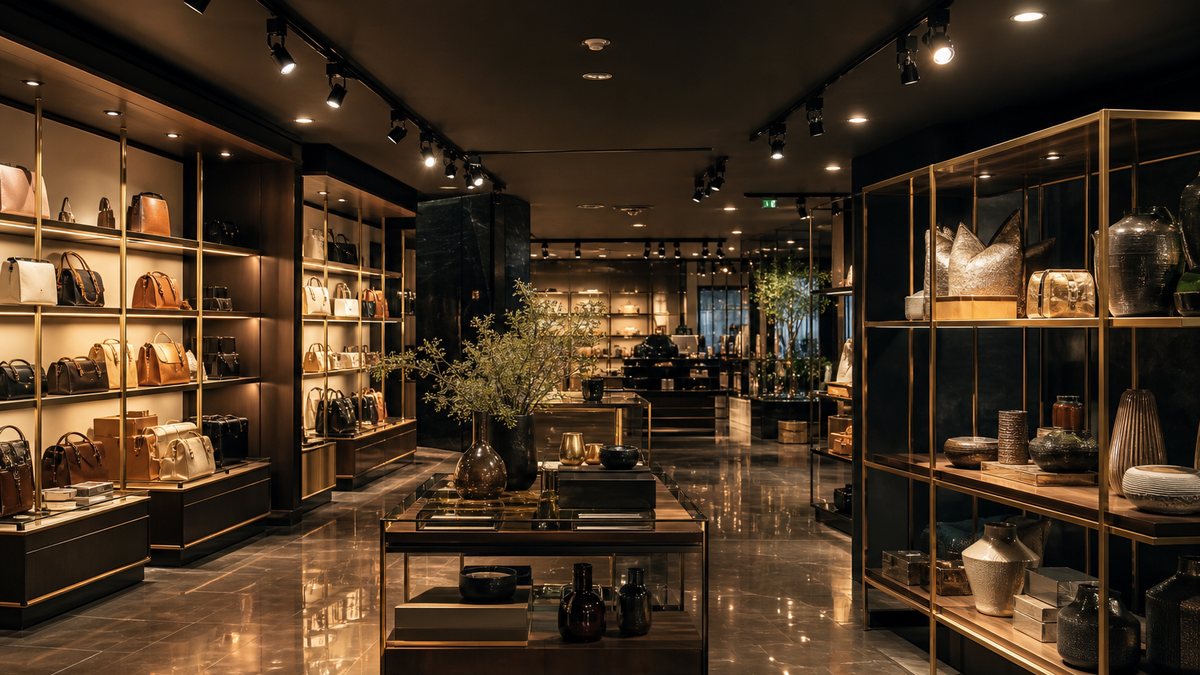
Retail lighting sells product. A layered approach uses ambient lighting for the overall space, accent lighting to highlight displays, and feature lighting for signage and focal points. High color rendering helps merchandise, food, and finishes look true to life. Track lighting gives flexibility as displays change.
Restaurants, bars and hospitality
With the Entertainment District, AT&T Stadium, Globe Life Field, and the Arlington Convention Center drawing visitors year-round, hotels, restaurants, and bars compete on atmosphere. Warm color temperatures, dimmable fixtures, and scene control let a space shift from lunch to dinner to late night. Architectural details such as cove lighting, under-bar lighting, and feature ceilings create memorable spaces.
Medical and professional offices
Exam rooms, dental suites, and clinics need accurate color rendering and higher light levels at task areas, with softer light in waiting rooms. Flicker-free drivers and good glare control matter for both patients and staff.
Churches and community spaces
Sanctuaries and fellowship halls benefit from dimmable house lighting, stage and platform lighting, and controls that volunteers can run with a single button. Lighting designed alongside any video display gives the best results. Our guide to LED video walls in Arlington explains how displays and room lighting work together.
Parking lots, garages and exteriors
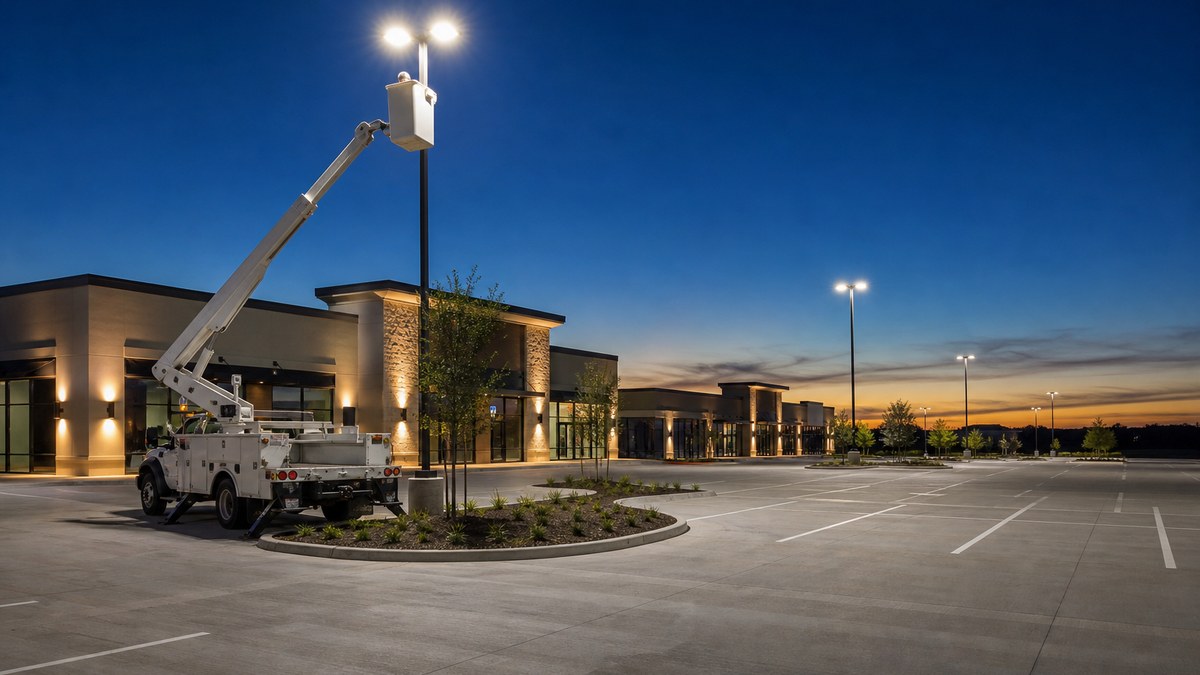
Exterior lighting is about safety, security, and first impressions. LED pole heads, wall packs, canopy lights, and garage fixtures with photocells and timers keep sites lit when needed. Shielded optics reduce glare and light trespass onto neighboring properties. Facade and landscape lighting make a building stand out after dark. For larger properties, see our guide to large-scale commercial LED lighting in Arlington.
Color temperature, color rendering and light quality
Two lights with the same brightness can feel completely different. These specifications decide how a space looks and feels:
| Specification | What it means | Typical commercial guidance |
|---|---|---|
| Color temperature (CCT) | Warm to cool appearance, in Kelvin | 2700K–3000K hospitality; 3500K–4000K offices and retail; 4000K–5000K warehouses and parking |
| Color rendering (CRI) | How accurately colors appear | 80+ general spaces; 90+ retail, medical, food and showrooms |
| Glare control | Shielding, diffusers and optics that reduce harsh brightness | Critical in offices, classrooms and screen-heavy areas |
| Flicker | Rapid variation in light output from the driver | Choose quality drivers, especially when dimming |
| Dimming range | How low fixtures dim smoothly | Important for hospitality, worship and conference rooms |
Consistency matters too. Mixing color temperatures in one space looks unprofessional, so a good installation uses matched fixtures and confirms color temperature on every product before it goes up.
Planning an install in Arlington?
Tell us about your building and what you want to improve. We will survey the space, recommend the right fixtures and controls, and prepare a project-specific proposal.
Lighting controls: getting more from every fixture
LED fixtures already use commonly far less energy than the older technologies they replace. Controls make sure that energy is only used when and where it is needed, and they make spaces more comfortable.
- Occupancy and vacancy sensors turn lights on or off based on whether people are present. Ideal for restrooms, break rooms, storage, private offices, and warehouse aisles.
- Daylight sensors dim fixtures near windows and skylights when natural light is available.
- Time schedules turn exterior and common-area lighting on and off automatically.
- Dimming and scenes let conference rooms, restaurants, churches, and lobbies switch between presets.
- Networked and wireless controls allow fixtures to be grouped, monitored, and adjusted from a central system or app, which helps multi-tenant and multi-site properties.
Controls should be simple for staff to use. A system that is too complicated ends up overridden or left on all the time, which defeats the purpose.
Keeping your business open during installation
The biggest concern most Arlington business owners have is disruption. A well-run installation is planned around your operations:
- After-hours and weekend work for offices, retail, and restaurants so customers and staff are not affected.
- Phased installation that completes one zone at a time, keeping the rest of the building fully lit and functional.
- Warehouse coordination around shifts, forklift traffic, and dock schedules, with lifts staged in clear areas.
- Protection of floors, merchandise, and equipment with drop cloths and covers, and daily cleanup.
- Clear communication so you know which areas will be worked on and when.
Utility incentives and tax considerations
Many Arlington businesses are served by Oncor for electric delivery. Commercial customers may qualify for energy efficiency incentives through Oncor programs, depending on program availability, building type, and the equipment installed. Programs change, have specific eligibility rules, and often require pre-approval before work begins, so check early in the planning process.
For some building owners, the federal Section 179D deduction for energy-efficient commercial buildings may apply to qualifying lighting improvements. Eligibility depends on the project and the building, so confirm with your tax advisor. A good installer can provide the fixture documentation your advisor or the utility program needs.
How to choose a lighting installer in Arlington
When you search "LED light installation near me" or "lighting installation Arlington," you will find everyone from handymen to large electrical contractors. For commercial work, look for these qualities:
- Licensed electrical work. In Texas, electrical work is performed by electricians licensed through the Texas Department of Licensing and Regulation. Ask who will perform and supervise the wiring.
- Commercial experience. Warehouses, retail, hospitality, and offices each have different needs. Ask about similar projects.
- Design capability. An installer who can plan light levels, layouts, and controls will deliver a better result than one who simply replaces like for like.
- Insurance. Request proof of general liability and workers' compensation coverage.
- Clear proposals. Itemized fixtures, labor, controls, permits, disposal, and schedule, with no vague line items.
- Warranty clarity. Ask what manufacturer warranties cover fixtures and drivers, and how workmanship issues are handled after the job.
- Service after installation. Who do you call if a fixture or sensor fails next year?
Arlington LED Lights coordinates commercial lighting projects across Arlington and DFW. Our licensed installation partner has completed over 200 major sports and commercial projects across the US and Canada — NFL, NBA, NHL, MLS, NCAA and NASCAR. We bring 15+ years as an authorized architectural lighting dealer and project coordinator to every project, from a single-suite retrofit to a full Luminance design-build transformation.
Common lighting installation mistakes to avoid
- One-for-one replacement without a design check. Old layouts were designed for old technology. Swapping every fixture one-for-one can leave areas over-lit or under-lit.
- Choosing on wattage alone. Lumens, optics, and glare control determine how a space actually looks.
- Mixed color temperatures from buying fixtures from different sources or in different batches.
- Skipping controls that the energy code may require, which can cause inspection problems.
- Ignoring driver compatibility with existing dimmers, which causes flicker and buzzing.
- No plan for spares. Keeping a few matching fixtures, drivers, and sensors makes future repairs fast.
- Unpermitted work that creates problems with insurers, landlords, or future buyers.
Lighting installation across Arlington and nearby cities
Arlington's commercial landscape is diverse. The Entertainment District around AT&T Stadium, Globe Life Field, and Texas Live! is home to hotels, restaurants, and event venues. The Great Southwest industrial area and the I-20 corridor are packed with warehouses and distribution buildings. Retail and office centers line Cooper Street, Collins Street, and the areas around UT Arlington. South Arlington continues to grow with new retail, medical, and office development, and neighboring communities such as Pantego, Dalworthington Gardens, Grand Prairie, and Mansfield share many of the same building types.
Arlington LED Lights serves all of these areas, along with Fort Worth, Dallas, and the wider DFW metroplex. See our service areas for the full list.
Maintenance after the install
One of the biggest advantages of LED lighting installation is reduced maintenance. LED fixtures commonly last many years longer than fluorescent, metal halide, or halogen sources, which means far fewer lift rentals and service calls. A few habits keep the system performing well:
- Keep fixture lenses and sensors clean, especially in warehouses and kitchens.
- Review control schedules when business hours change or daylight saving time begins and ends.
- Keep a record of fixture models and locations so replacements match.
- Address failed drivers or sensors promptly to keep the space consistent.
For ongoing service and repairs, our lighting repair and service team can help.
Frequently Asked Questions
How long does a commercial lighting installation take in Arlington?
Do I need a permit for commercial lighting installation in Arlington, TX?
Should I retrofit my existing fixtures or replace them?
Can lighting be installed without closing my business?
Are lighting controls required when I install new LED lights?
What color temperature should I choose for my business?
How much does commercial lighting installation cost in Arlington?
Can my business get incentives for LED lighting installation?
Do you install lighting outside Arlington?
Let's plan your lighting installation
Request a consultation and we will follow up to discuss your building, your goals, and your timeline.
Related
Explore more from our lighting blog, see all our services, or return to the Arlington LED Lights home page.
Our DFW lighting network: Dallas LED video walls and commercial lighting, Fort Worth LED lighting, Irving LED lighting, Plano LED lighting, statewide Texas LED lighting, wholesale LED components, LED signs and message centers, fiber optic starlight ceilings, 360° fiber optic lighting, commercial pool lighting, modular building solutions, and Dallas modular structures.