Commercial LED Lighting in Texas: A Buyer's Guide for Offices, Warehouses, Retail & Facilities
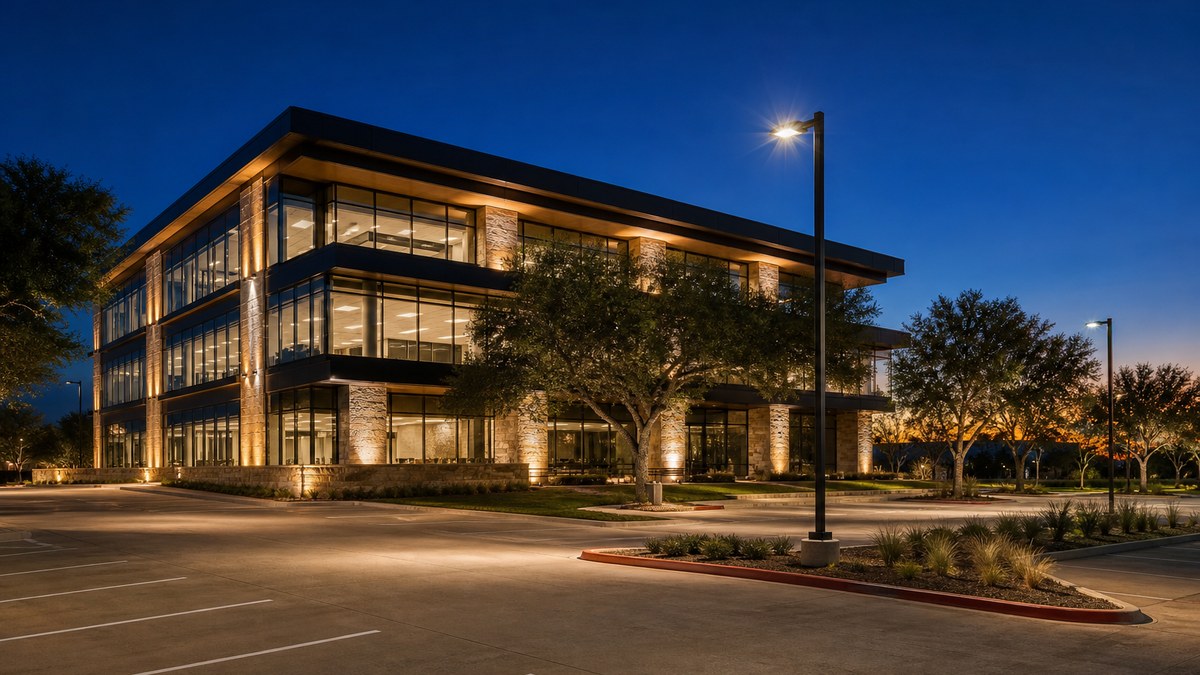
Commercial LED lighting in Texas is no longer a question of whether to switch, but how to do it well. Offices, warehouses, retail centers, hotels, churches, schools and parking lots across the state are replacing fluorescent, metal halide and high-pressure sodium fixtures with LED systems that use far less energy, last longer and give owners real control over how a space looks and feels. But Texas adds its own twists: long, hot summers that punish cheap drivers, hail and wind that test exterior fixtures, a statewide energy code with local amendments, and utility efficiency programs that differ depending on who delivers your power.
This guide is written for business owners, facility managers and property teams who want to make good decisions about commercial LED lighting in Texas. It covers how to choose fixtures for each type of building, what Texas climate and codes mean for your project, how utility incentives and tax rules work at a high level, how to evaluate an LED lighting company, and what a well-run project looks like from first walk-through to final aiming. We are based in Arlington and work across the Dallas-Fort Worth metroplex, so you will see local examples, but the principles apply anywhere in the state.
Commercial LED lighting in Texas means replacing or designing building and site lighting with LED fixtures, drivers and controls suited to Texas heat, storms and codes.
- Start with an audit: fixture counts, hours of use, light levels and controls tell you where LED delivers the most value
- Buy for the climate: heat-rated drivers, good thermal design, surge protection and wet-location ratings matter in Texas
- Look for DLC or ENERGY STAR listings: utility programs commonly require qualified products
- Plan controls with the fixtures: the statewide energy code and many local codes expect occupancy sensing, daylight response and automatic shutoff
- Check incentives early: Oncor, CenterPoint, AEP Texas, TNMP and other utilities run commercial efficiency programs, depending on program availability
- Use licensed installers: electrical work in Texas is regulated by TDLR
- Pricing: every project is quoted to its scope in a project-specific proposal
Why Texas businesses are moving to LED
The basic case for LED is the same everywhere: LED fixtures commonly use far less energy than the fluorescent, metal halide and sodium fixtures they replace, they last much longer, and they turn on instantly at full output. In Texas the case gets stronger for a few reasons.
- Heat load. Older lamps turn a large share of their energy into heat. In a Texas summer, that heat is something your air conditioning has to remove. Efficient lighting reduces that internal heat gain, which helps cooling systems as well as the lighting bill.
- Long operating hours. Warehouses, distribution centers, hospitals, hotels, parking garages and 24-hour retail run lights for very long hours. The longer the hours, the more an efficient system matters.
- Maintenance labor. High-bay and pole fixtures need lifts to service. Fewer lamp and ballast failures mean fewer lift rentals, fewer disrupted shifts and fewer dark corners in the meantime.
- Grid awareness. Texas businesses pay close attention to peak demand on the ERCOT grid. Lighting that uses less power and can be dimmed or scheduled gives owners more flexibility.
- Better light. Modern LED offers good color rendering, even distribution and precise optics. Customers see products more clearly, workers see tasks more easily, and parking lots feel safer.
Commercial LED lighting by building type
There is no single "commercial LED fixture." The right choice depends on ceiling height, the task, how long the lights run and what the space needs to communicate. Here is how we think about the most common Texas building types.
| Space | Typical LED solutions | Common color temperature | Controls to consider |
|---|---|---|---|
| Offices and corporate interiors | Flat panels, troffer retrofits, linear pendants, downlights | 3500K to 4000K | Occupancy sensors, daylight dimming, scheduling |
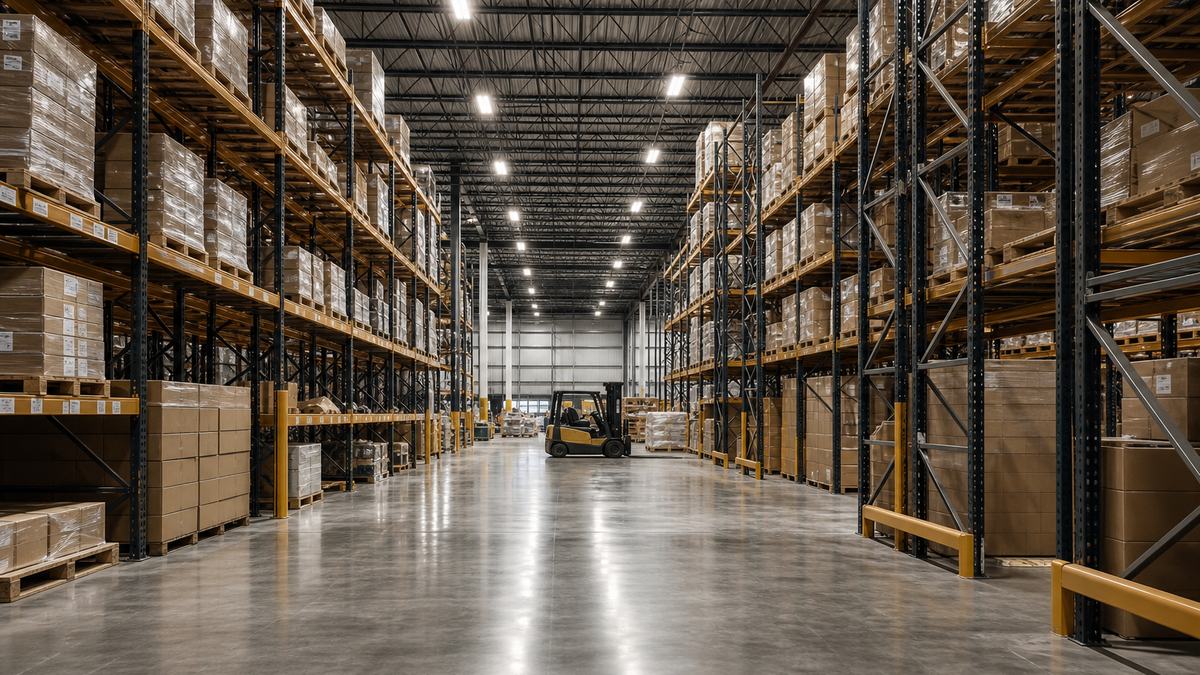
| Warehouses and distribution | LED high bays, linear high bays, aisle optics | 4000K to 5000K | High-bay occupancy sensors, zoning by aisle |
| Manufacturing and industrial | High bays, vapor-tight and wet-location fixtures | 4000K to 5000K | Zoned switching, sensors where safe |
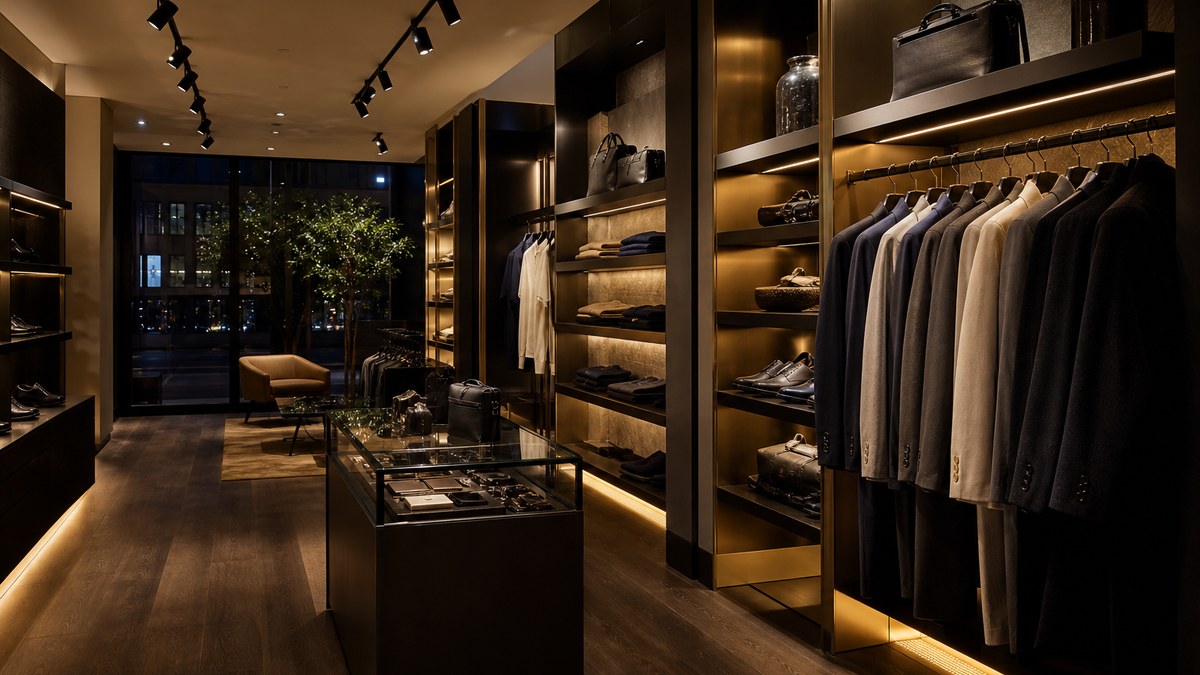
| Retail and showrooms | Track lighting, adjustable downlights, linear accents | 3000K to 4000K, high CRI | Scene control, store-hours scheduling |
| Hotels and hospitality | Decorative fixtures, cove and accent lighting, downlights | 2700K to 3000K | Dimming scenes for lobby, ballroom and dining |
| Churches and auditoriums | Dimmable house lights, stage and architectural lighting | Varies by space | Scene presets, smooth dimming |
| Parking lots and garages | Area and pole lights, garage canopy fixtures, wall packs | 3000K to 4000K | Photocells, bi-level motion dimming |
| Building exteriors and facades | Wall washers, grazers, linear and color-changing fixtures | Warm white or tunable color | Astronomic timers, DMX or programmed scenes |
Offices and corporate interiors
Most Texas office buildings still have some 2x4 or 2x2 fluorescent troffers. Options range from retrofit kits that reuse the housing to new flat panels and linear pendants. Good office lighting balances light levels with glare control and adds sensors and daylight dimming near windows. For local examples of what that looks like, see our guide to business lighting services in Arlington.
Warehouses, distribution and industrial
The industrial corridors around DFW, Houston, San Antonio and Austin are full of tall-ceiling buildings where metal halide or fluorescent high bays are still burning. LED high bays with the right optics put light in the aisles and on the racks instead of the ceiling, and occupancy sensing in aisles that see occasional traffic cuts waste further. Dusty or washdown areas need sealed fixtures. Our lighting installation guide walks through how high-bay installs are staged around operations.
Retail, restaurants and showrooms
Retail lighting sells. High color rendering, warm-to-neutral white and adjustable track or accent fixtures make merchandise look right. Restaurants and bars lean warmer and need smooth dimming to move from lunch to late night. Shopping centers also need consistent exterior and parking lighting so the whole property feels open and safe.
Hotels, venues and large facilities
Hotels, convention spaces and entertainment venues combine nearly every lighting type in one property: lobbies, ballrooms, guest corridors, back-of-house, garages, facades and signage. These projects benefit from one coordinated plan. Read more in our guide to commercial LED lighting for large-scale projects.
Built for Texas: heat, storms and long summers
LEDs do not like heat. The diodes themselves and especially the drivers age faster when they run hot. Texas buildings put fixtures in some of the toughest conditions in the country: un-air-conditioned warehouses in August, attic-like ceiling spaces, sun-baked parking lots and facades that face the western sun. When you compare fixtures, look past the wattage and lumen numbers.
- Rated ambient temperature. Check the fixture's rated operating temperature range and make sure it fits the real conditions at mounting height, not the thermostat setting at floor level.
- Thermal design. Well-designed heat sinks and housings keep the LEDs and driver cooler, which protects light output and lifespan.
- Driver quality. The driver is the most common failure point. Reputable drivers with clear ratings and warranty support are worth asking about.
- Surge protection. Lightning and utility switching are part of life in Texas. Exterior and pole fixtures should include surge protection suited to the site.
- Wet-location and ingress ratings. Exterior fixtures need wet-location listing and appropriate IP ratings for driving rain and dust.
- Impact and wind. Pole heads, wall packs and canopy fixtures should be specified with hail and wind exposure in mind, and poles and bases should be checked when fixtures are replaced.
- Lumen maintenance. Look for published lumen maintenance data (often shown as L70 or similar ratings) so you know how output holds up over time.
Ask for fixture spec sheets before you approve a proposal. A good LED lighting company will explain the driver, the thermal rating, the warranty terms and why that fixture fits your building, not just the wattage.
Texas energy codes and lighting controls
Texas sets a statewide minimum energy code for commercial buildings through the State Energy Conservation Office (SECO). The statewide commercial code is based on the 2015 International Energy Conservation Code, and SECO has been gathering input on whether to move to a newer edition. Many Texas cities have adopted newer editions locally, sometimes with their own amendments, so the code that applies to your project depends on where the building is. Always confirm the current requirements with your city's building department before you design.
For lighting, energy codes typically address three things:
- Lighting power limits. Maximum allowable lighting power for interior and exterior areas. LED makes these limits easy to meet, but they still apply to new construction and major alterations.
- Required controls. Codes commonly require manual or automatic shutoff, occupancy sensing in certain room types, daylight-responsive controls near windows and skylights, and exterior controls that turn lights off or down when not needed.
- Alterations. When enough fixtures in a space are replaced, the project may trigger control requirements even if you did not plan to change them.
Controls are not just a code box to check. They are where much of the extra savings in a commercial LED lighting project comes from, because the cheapest light is the one that is off when no one needs it. Options include:
- Fixture-integrated sensors that dim or turn off each fixture based on occupancy and daylight
- Room controllers and wall stations for offices, classrooms and conference rooms
- Networked lighting controls that let facility staff schedule, zone and adjust a whole building from one interface
- DALI and 0-10V dimming for smooth control of interior fixtures
- DMX and architectural controllers for color-changing facades, venues and feature lighting
- Photocells and astronomic timers for parking lots, signs and exteriors
Utility incentives and tax considerations
Texas utilities that deliver power over their wires run energy efficiency programs for commercial customers. Who runs your program depends on where the building is. Across much of North and Central Texas, including Arlington and most of the DFW metroplex, that is Oncor. In the Houston area it is CenterPoint, and in other regions it may be AEP Texas, TNMP or another utility. Municipal utilities and electric cooperatives may run their own programs.
Oncor, for example, describes its commercial offerings as paying incentives to participating service providers who complete qualifying work for customers on Oncor meters, with commercial programs typically running for most of the year while funding is available. Programs, eligible measures and funding change from year to year, so:
- Your project may qualify for incentives depending on your utility, the measures installed and program availability
- Programs commonly require pre-approval before work starts, so check early
- Qualified product listings such as DLC (DesignLights Consortium) or ENERGY STAR are often required
- Documentation of the existing fixtures and the new ones is part of the process
On the tax side, the federal Section 179D energy-efficient commercial buildings deduction was ended by 2025 federal legislation for projects whose construction begins after June 30, 2026. Projects that started earlier may still be eligible, and other depreciation rules may apply to lighting upgrades. Tax treatment depends on your situation, so confirm with your tax advisor before counting on any deduction.
Ready to plan your LED upgrade?
Tell us about your building, your hours and what is not working today. We will walk the site and prepare a project-specific proposal.
Retrofit kits, lamps or new fixtures?
One of the first decisions in any commercial LED lighting project in Texas is how much of the existing system to keep. There are three main paths, and many buildings use a mix of all three.
| Approach | What it is | Best for | Watch out for |
|---|---|---|---|
| LED lamps (tubes) | LED tubes replace fluorescent lamps in existing fixtures | Quick upgrades where fixtures are in good shape | Ballast compatibility, aging housings, limited control options |
| Retrofit kits | New LED light engine and driver installed in the existing housing | Troffers and fixtures with sound housings and ceilings | Listing requirements, matching appearance, sensor options |
| New fixtures | Complete replacement with new LED luminaires | High bays, exteriors, damaged fixtures, redesigns | More installation work; best when layout or light levels need to change |
Lamps and kits can be a good fit when the layout already works and the ceiling is in good condition. New fixtures make more sense when the old layout produces dark spots or glare, when fixtures are failing, or when you want integrated sensors and networked controls. A lighting audit will tell you which path fits each area of the building.
Exterior, parking and site lighting
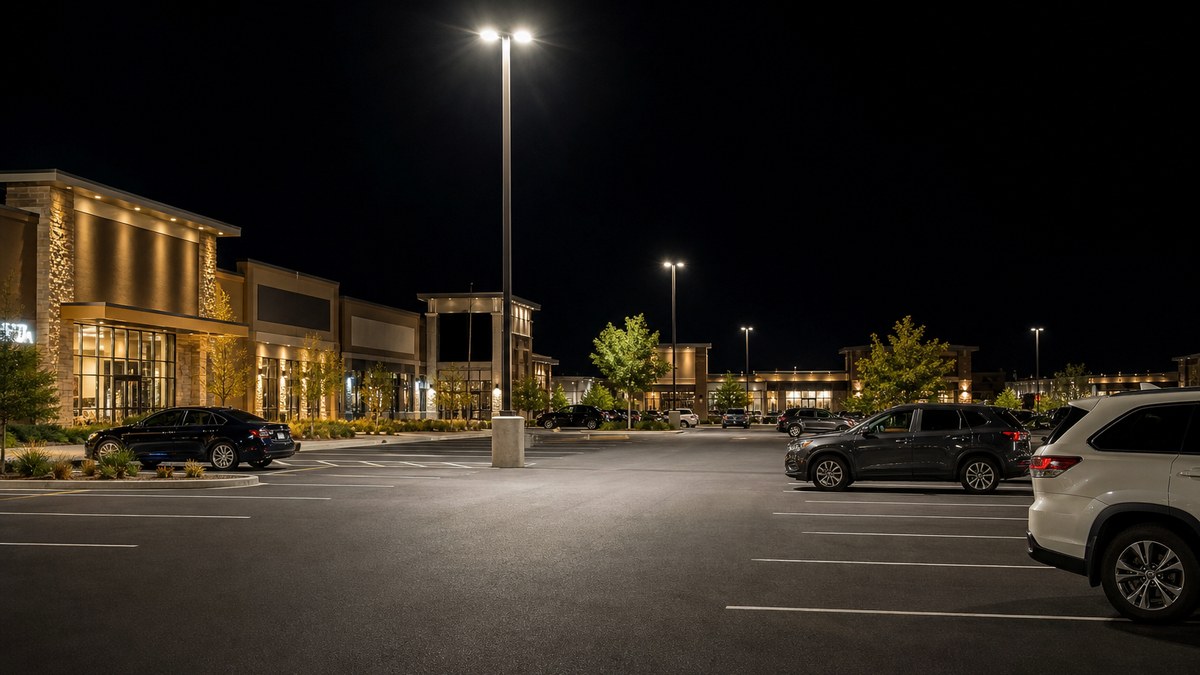
Exterior lighting is often the most visible part of a commercial property and one of the best places to start. Old metal halide and sodium pole lights fade and shift color over time, leaving dark patches across parking lots. LED area lights with the right optics put light where cars and people are, reduce glare toward neighbors and the street, and can dim automatically late at night.
- Parking lots: LED area lights with optics matched to pole spacing, plus photocells and motion dimming
- Parking garages: garage fixtures with integrated sensors that brighten as cars and people move through
- Building perimeters: wall packs and cutoff fixtures that light entries and walkways without glare
- Facades and landmarks: architectural lighting that makes a building visible and memorable after dark
- Signs: LED sign lighting and message centers, covered in our guide to LED signs in Arlington
Many Texas cities have rules on exterior lighting glare, shielding and light trespass, and some have specific requirements for signs. Check with your city before changing exterior fixtures, especially near residential areas.
How a commercial LED project works, step by step
- Walk-through and audit. We document existing fixtures, counts, mounting heights, operating hours, control types, problem areas and the condition of ceilings, poles and wiring.
- Goals and priorities. We talk about what matters most to you: energy use, light quality, safety, appearance, maintenance or a specific deadline.
- Lighting design. For layout changes or new spaces, we plan fixture placement and light levels, often with photometric layouts, and choose controls.
- Product selection. Fixtures, drivers and controls are chosen for the space, the climate and any incentive program requirements.
- Incentive and permit steps. We identify programs that may apply and the permits or approvals the work may need.
- Proposal. A clear, project-specific proposal covering products, labor, controls, schedule and warranty.
- Installation. Licensed electricians install the system, often in phases or after hours to keep your business running.
- Commissioning. Sensors, dimming, schedules and aiming are set and tested so the system works as designed.
- Handover and support. Your team gets documentation, warranty information and a contact for service.
For the full detail on installation day logistics, lifts, after-hours work and inspections, see Lighting Installation in Arlington, TX.
How to choose an LED lighting company in Texas
Searches like "commercial LED lighting company in Texas" or "LED lighting specialists" return everyone from online fixture sellers to electricians to design-build firms. Here is what separates a good partner from a box seller.
- Site visit first. A real proposal starts with seeing the building. Be cautious of quotes based only on a fixture count over the phone.
- Licensed installation. In Texas, electrical work is regulated by the Texas Department of Licensing and Regulation. Ask who will perform the electrical work and confirm the license.
- Design ability. Can they show light levels, layouts and control plans, not just a product list?
- Product transparency. They should provide spec sheets, listings, warranty terms and the reasons behind each choice.
- Controls knowledge. Code-required and money-saving controls need someone who can program and commission them.
- Incentive familiarity. They should know how your utility's program works and what documentation it needs.
- Technical support after install. Ask how warranty claims, service calls and control changes are handled once the job is finished.
- Scale. For large or complex sites, ask about experience coordinating multi-trade projects.
Arlington LED Lights brings 15+ years as an authorized architectural lighting dealer and project coordinator. Our licensed installation partner has completed over 200 major sports and commercial projects across the US and Canada — NFL, NBA, NHL, MLS, NCAA and NASCAR. That depth is available to Arlington and DFW businesses of every size, from a single storefront to a full campus.
Common mistakes with commercial LED lighting
- Buying on wattage alone. Two fixtures with the same wattage can produce very different light, glare and lifespan. Look at optics, efficacy, thermal ratings and drivers.
- Overlighting. LEDs make it easy to blast light everywhere. More is not always better; uniformity and glare control matter more.
- Mixing color temperatures. A space with a patchwork of warm and cool fixtures looks unfinished. Standardize color temperature by area.
- Skipping controls. Fixtures without sensors or schedules leave savings on the table and may not meet code for the project.
- Ignoring the climate. Fixtures that are not rated for Texas heat or exposure fail early.
- Missing the incentive window. Starting work before pre-approval can disqualify a project from utility programs.
- No plan for the whole property. Piecemeal upgrades often produce mismatched results. A phased master plan keeps everything consistent.
Commercial LED lighting across DFW and Texas
We are based in Arlington and serve businesses throughout Tarrant and Dallas counties, including Grand Prairie, Mansfield, Pantego, Fort Worth, Irving and Dallas. Arlington's mix of buildings is a good snapshot of Texas as a whole: offices and medical buildings, the industrial parks of the Great Southwest area, retail centers along the major corridors, churches and schools, and the hotels and venues of the Entertainment District around AT&T Stadium, Globe Life Field and Texas Live!. For local service details, see our South Arlington, Pantego and Mansfield guide and our service areas.
Beyond general lighting, we coordinate the features that make a property stand out: LED video walls for lobbies, churches and venues, LED sports lighting for fields and gyms, architectural and facade lighting, and LED signage. For owners who want one team from concept to completion, our Luminance design-build program covers design, products, installation and commissioning.
Frequently Asked Questions
Is commercial LED lighting worth it for Texas businesses?
What is the energy code for commercial lighting in Texas?
Are there LED lighting rebates for businesses in Texas?
What does DLC listed mean?
What color temperature is best for commercial LED lighting?
Should I use LED retrofit kits or new fixtures?
How long do commercial LED fixtures last in Texas heat?
Do I need a licensed electrician for commercial LED lighting in Texas?
Can I still use the 179D tax deduction for LED lighting?
How much does commercial LED lighting cost in Texas?
Let's light your Texas property
Request a consultation and we will follow up to discuss your building, your goals and your timeline.
Related
Our Texas lighting network: Dallas commercial LED lighting, Fort Worth LED lighting, Irving LED lighting, Plano LED lighting, statewide Texas LED lighting, wholesale LED components, LED signs and message centers, fiber optic starlight ceilings, 360° fiber optic lighting, modular building solutions, and Dallas modular structures. Questions? Contact Arlington LED Lights or browse more guides on our blog.