How to Choose a Commercial LED Lighting Company in Arlington, TX: What to Look For, What to Ask & Red Flags to Avoid
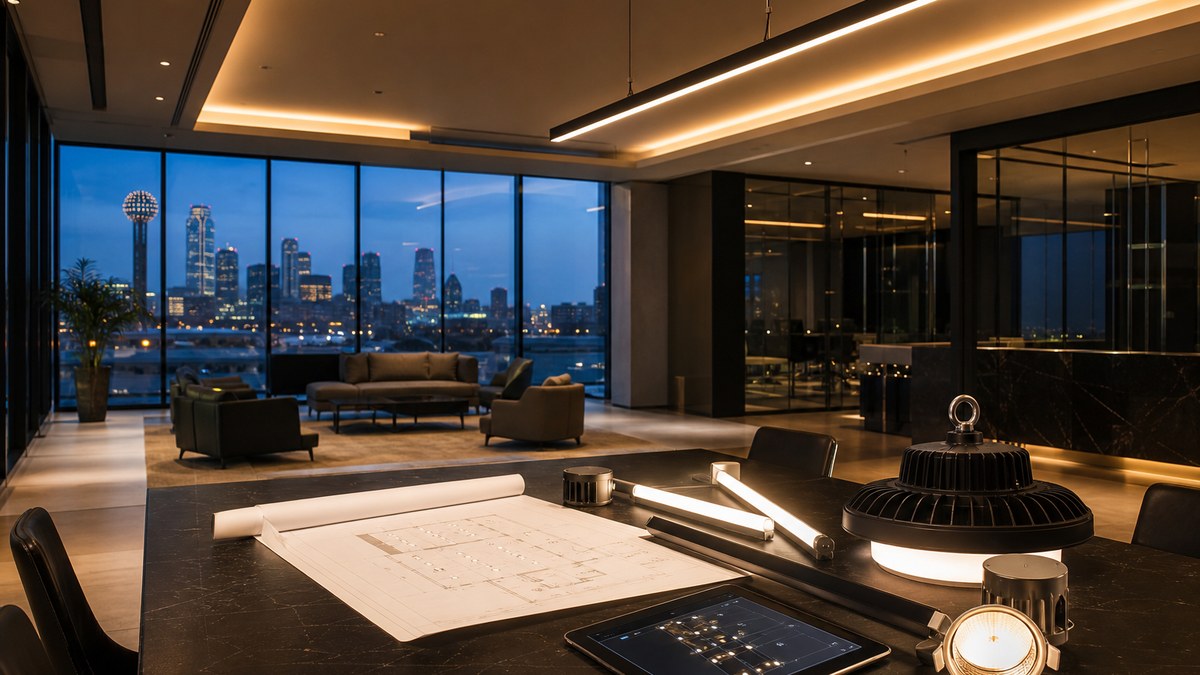
Choosing a commercial LED lighting company in Arlington is a bigger decision than picking a fixture from a catalog. The company you hire decides how bright and even your spaces feel, whether the work passes inspection, whether your controls actually save energy, and who answers the phone when a driver fails two years from now. Search for "LED companies near me" or "LED lighting specialists" and you will find manufacturers, online stores, electricians, distributors and design-build firms all using the same words. They are not the same thing.
This guide explains the different kinds of LED lighting companies, the credentials and documents that matter in Texas, the questions to ask before you sign, how to compare proposals fairly, and the red flags that usually signal trouble. It is written for Arlington property managers, facility directors, business owners, church boards, developers and general contractors who want a lighting partner they can trust for the life of the system, not just for install day.
The best commercial LED lighting company for your Arlington project is one that designs, installs and supports the whole system, and can prove it with documents rather than promises.
- Licensing: electrical work in Texas must be done under a TDLR-licensed electrical contractor, with City of Arlington permits and inspections where required
- Design first: look for a site walk, light-level targets and a photometric layout before anyone talks fixture counts
- Qualified products: commercial fixtures should be UL or ETL listed and, where incentives are involved, typically DLC listed
- Controls and code: the company should explain occupancy sensors, daylight dimming and energy-code requirements in plain language
- Support: ask who handles warranty claims, spare parts and service calls after the job is closed out
- Clear proposal: a written, project-specific scope that lists fixtures, controls, labor, permits, disposal and exclusions
Why the company matters more than the fixture
Modern LED fixtures from reputable brands are good. The difference between a lighting upgrade that people love and one that people complain about is rarely the diode itself. It is the decisions around it: how many fixtures, where they go, what color temperature, what beam spread, how they are controlled, how they are wired, and how glare is handled. Those decisions are made by the company you hire.
A poor choice of partner tends to show up in predictable ways:
- Over-lit or under-lit spaces because fixtures were swapped one-for-one without checking light levels
- Glare and hot spots in offices, classrooms and retail floors from the wrong optics
- Flicker or buzzing from mismatched dimmers and drivers
- Controls that nobody uses because sensors were placed badly or never commissioned
- Failed inspections or code gaps that delay a certificate of occupancy
- No one to call when a fixture fails and the original installer has moved on
Every one of these is avoidable when the company treats lighting as a designed system. If you want a broader overview of the technology first, read our buyer's guide to commercial LED lighting in Texas.
The four kinds of "LED lighting companies"
Many of the businesses that show up when you search for an LED lighting company fall into one of four groups. Knowing which one you are talking to tells you what they can and cannot do for you.
| Type of company | What they do well | What to watch for |
|---|---|---|
| Manufacturer | Designs and builds fixtures; publishes spec sheets, photometric files and warranties | Usually does not install; you still need a designer and a licensed electrical contractor |
| Distributor or online store | Wide product selection and availability | Product only; little or no design, installation or site-specific advice |
| Electrical contractor | Licensed wiring, permits, installation and inspections | Some focus on wiring rather than lighting design, controls and aesthetics |
| Lighting design-build specialist | Site walk, lighting design, product selection, coordinated installation, controls and support under one scope | Confirm who the licensed installer is and what is included in the scope |
For most commercial buildings in Arlington, a design-build approach is the simplest path: one team is responsible for the result, from the first site walk to the final walk-through. That is how Arlington LED Lights works, including through our Luminance design-build program for complete lighting transformations.
When a search result says "LED manufacturer near me," check whether the company actually installs. A manufacturer can be a great source of product, but you will still need someone to design the layout, pull permits and stand behind the installation.
Credentials that matter in Texas
Electrical licensing
In Texas, electrical contractors and electricians are licensed by the Texas Department of Licensing and Regulation (TDLR). Commercial lighting installation involves electrical work, so it should be performed under a licensed electrical contractor, by licensed electricians. Electrical sign work is covered by its own license category. You can verify any Texas electrical license through TDLR's public license search before you sign a contract. Ask the company directly: "Who is the licensed electrical contractor on this job?"
Permits and inspections in Arlington
Many commercial lighting projects need an electrical permit and inspections through the City of Arlington, particularly new circuits, new poles, panel work and larger renovations. A good lighting company knows when a permit is required, includes it in the scope, and schedules the inspections. If you are not sure whether your project needs a permit, the city's building inspections office can confirm it, and your lighting partner should be able to tell you before work starts.
Insurance
Ask for a certificate of insurance naming your company or property owner as required by your lease or management agreement. Commercial properties, schools, churches and hotels often have specific insurance requirements for anyone working on site, including lift operation and after-hours work.
Experience with your kind of building
A warehouse with 30-foot ceilings, a church sanctuary, a hotel ballroom and a medical office each have very different lighting needs. Ask for examples of similar work and how the team approached the specific challenges of that building type. Our own background is direct and verifiable:
- Our licensed installation partner has completed over 200 major sports and commercial projects across the US and Canada — NFL, NBA, NHL, MLS, NCAA and NASCAR.
- 15+ years as an authorized architectural lighting dealer and project coordinator.
Product standards to ask about
You do not need to become a lighting engineer, but a few product terms help you tell quality proposals from cheap ones.
- UL or ETL listing: fixtures used in commercial buildings should carry a recognized safety listing. Unlisted imports can create inspection and insurance problems.
- DLC listing: the DesignLights Consortium maintains a Qualified Products List for commercial LED fixtures and retrofit kits that meet performance requirements. Many utility incentive programs reference DLC (or ENERGY STAR for some lamp types), so DLC-listed products help keep your options open.
- LM-79, LM-80 and TM-21 data: standardized test reports for fixture performance and how well the LEDs hold their brightness over time. Reputable manufacturers publish them.
- Color temperature (CCT): warmer tones (around 3000K) for hospitality, restaurants and worship spaces; neutral tones (3500K to 4000K) for offices and retail; cooler tones (4000K to 5000K) for warehouses, parking and work areas.
- Color rendering (CRI): higher CRI makes products, food, finishes and skin tones look natural. Retail, hospitality and healthcare benefit most.
- Optics and glare control: lenses, louvers and beam spreads matter as much as lumens, especially in offices, classrooms and gyms.
- Drivers and dimming: confirm the dimming protocol (0-10V, DALI, phase dimming) matches your controls to avoid flicker.
Fixture warranties come from the manufacturer, while workmanship is covered by the installer. Ask the company to explain both in writing: what the manufacturer warranty covers, how long the installation workmanship is covered, and who you call to make a claim.
The process a good company follows
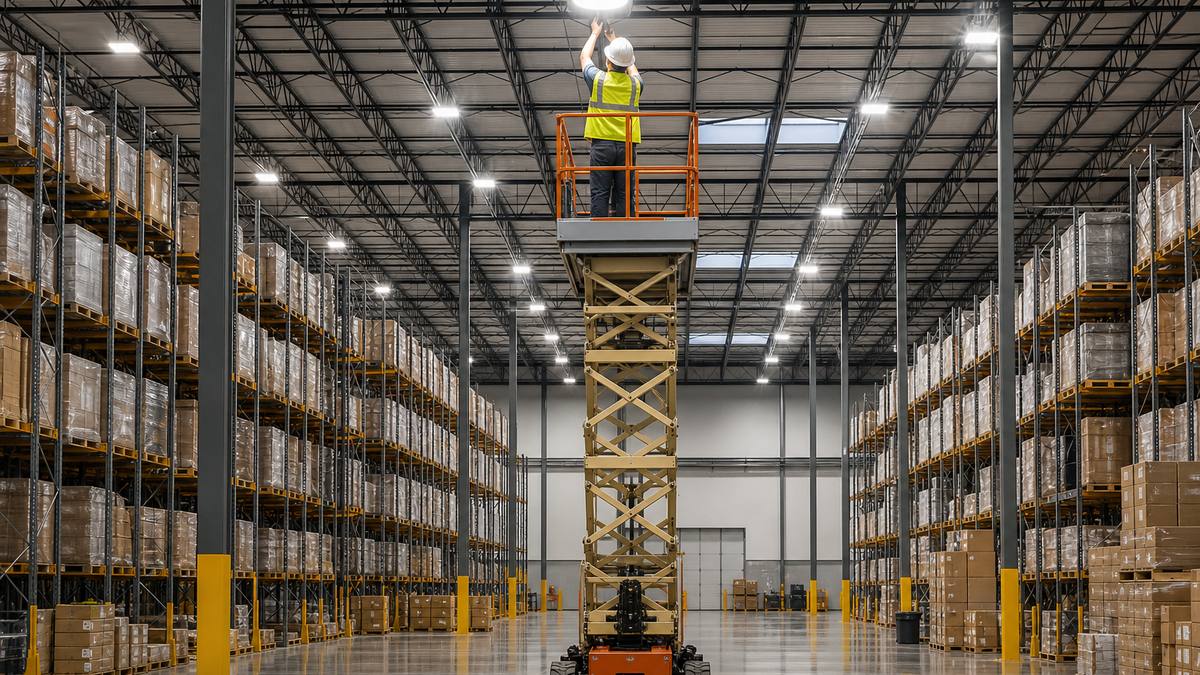
Most problems in commercial lighting start because a step was skipped. Here is the process you should expect from a professional lighting company, and the one we follow on lighting installations in Arlington:
- Discovery conversation. Your goals, schedule, budget priorities, occupancy hours, problem areas and any lease or brand standards.
- Site walk and audit. Fixture counts, mounting heights, ceiling types, existing circuits and controls, measured light levels, and access constraints.
- Lighting design. Target light levels by space, fixture selection, layout and, where it matters, photometric calculations to confirm even coverage.
- Controls strategy. Occupancy and vacancy sensors, daylight dimming, schedules and scenes, matched to how the building is used and to energy-code requirements.
- Written proposal. A project-specific scope listing every fixture, control, labor item, permit and exclusion.
- Scheduling and installation. Phased work around your operations, often after hours for retail, offices and hospitality.
- Commissioning. Sensors aimed and timed, dimming ranges set, schedules programmed, emergency lighting tested.
- Closeout and support. As-built fixture schedule, product data, warranty documents, staff orientation and a clear path for service.
Looking for an LED lighting partner you can rely on?
Tell us about your building and what is not working today. We will walk the site, recommend a plan and prepare a project-specific proposal.
Questions to ask before you hire
Use this list when you interview LED lighting companies. A strong company will answer each question clearly and in writing.
About the team
- Who is the licensed electrical contractor, and can I see the TDLR license number?
- Who designs the lighting, and who will be my single point of contact?
- Have you worked on buildings like mine, and what did you learn from them?
- Do you use your own crews or subcontractors, and who supervises them on site?
About the design
- What light levels are you designing to in each space, and why?
- Will you provide a photometric layout for areas like parking lots, warehouses or gyms?
- How are you handling glare, color temperature and color rendering?
- Are you replacing fixtures one-for-one, or redesigning the layout?
About controls, code and incentives
- Which energy-code control requirements apply to my project, and how does the design meet them?
- Who programs and commissions the sensors and dimming?
- Could this project qualify for Oncor or other utility incentives, and do you help with the paperwork?
About support
- What is covered by the manufacturer warranty and what is covered by your workmanship?
- If something fails, who do I call, and how is a warranty claim handled?
- Do you recommend keeping spare drivers or fixtures on hand?
- Do you offer ongoing service or maintenance after the project closes?
How to compare proposals fairly
Two proposals for the same building can look very different, and the lowest number is not always the lower cost. Lay them side by side and check that each one covers the same items.
| What to compare | What a complete proposal shows |
|---|---|
| Fixture schedule | Manufacturer, model, wattage, lumens, color temperature, CRI and listing for each fixture type |
| Quantities and layout | Counts by area, and whether the layout was redesigned or swapped one-for-one |
| Controls | Sensor types and locations, dimming protocol, schedules, programming and commissioning |
| Labor and access | Lift equipment, after-hours work, phasing and any ceiling or patch work |
| Electrical scope | New circuits, panel work, poles or bases, and what existing wiring is reused |
| Permits and inspections | Included or excluded, and who schedules them |
| Disposal and recycling | Removal of old fixtures, lamps and ballasts |
| Warranty and support | Manufacturer warranty terms, workmanship coverage and the service process |
| Exclusions | A clear list of what is not included, so there are no surprises later |
If one proposal leaves out permits, controls or disposal, it is not really cheaper. It has simply moved those costs to you later. At Arlington LED Lights every job is quoted as a project-specific proposal so you can see exactly what is included.
Red flags when hiring an LED lighting company
- No site visit. A quote built from a phone call or a photo almost always misses something.
- Lumens-only selling. Brighter is not better if it brings glare, uneven coverage or wasted energy.
- Vague product descriptions such as "LED panel, 40W" with no manufacturer, model or listing.
- Guaranteed savings or rebate promises before anyone has reviewed your usage, rates or program eligibility.
- No license number or reluctance to name the licensed electrical contractor.
- Controls as an afterthought, or sensors that are installed but never commissioned.
- Pressure to sign today to lock in a deal.
- No plan for after the install: no warranty paperwork, no fixture schedule, no service contact.
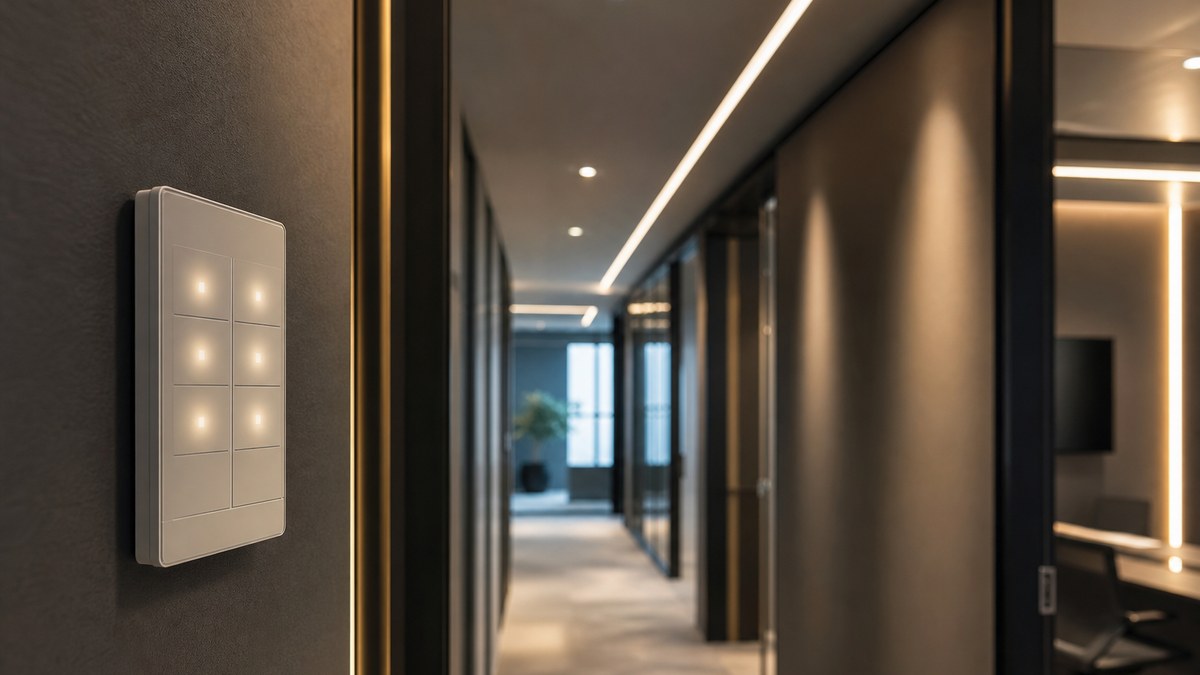
Lighting controls: the test of a real specialist
Controls are where a true LED lighting specialist separates from a fixture swapper. The energy codes used across Texas require automatic controls in most commercial spaces, such as occupancy or vacancy sensors in offices and restrooms, automatic shutoff by schedule, and daylight-responsive controls near windows and skylights. Texas' statewide commercial minimum is the 2015 IECC, and many cities have adopted newer editions locally, so confirm the current requirements for your project with the city.
Beyond code, controls are often where the long-term value lives:
- Occupancy and vacancy sensors turn lights off in empty rooms, aisles and restrooms.
- Daylight harvesting dims fixtures near windows when sunlight is available.
- High-end trim sets maximum output to the level the space actually needs.
- Scheduling matches lighting to business hours, services and events.
- Networked and wireless controls let facility teams monitor and adjust lighting from one place.
- DALI and DMX give precise, addressable control for architectural, hospitality, worship and entertainment lighting.
Ask any company you interview to explain the control plan in plain language. If they cannot, the system probably will not be set up properly either.
Technical support after the install
People searching for a "commercial LED lighting company with technical support" usually learned this lesson the hard way. A lighting system runs for many years, and the relationship should too. Before you hire, ask how the company supports the system after closeout:
- Documentation: an as-built fixture schedule with model numbers, plus product data and warranty documents, so any future technician knows exactly what is installed.
- Warranty handling: a clear process for diagnosing a failure, contacting the manufacturer and replacing the part.
- Spare parts: keeping matched spare drivers or fixtures avoids color mismatches and long waits.
- Controls adjustments: schedules and sensor settings often need tuning once a building is occupied.
- Repairs and additions: tenant changes, new areas and occasional damage from storms or vehicles.
Arlington LED Lights provides repair and service for commercial lighting, so the same team that designed your system can help keep it running.
Incentives and tax questions: what an honest company says
Utility incentives can help with an LED upgrade, but they depend on program rules and timing. Commercial buildings on Oncor meters may qualify for Oncor's commercial energy-efficiency programs, depending on program availability, which typically work through participating service providers and run on an annual program cycle. Other parts of Texas are served by different utilities, such as CenterPoint, AEP Texas and TNMP, each with its own programs.
For federal tax questions, the Section 179D deduction ended for projects whose construction begins after June 30, 2026, under 2025 federal legislation. Earlier projects may still qualify; confirm with your tax advisor. A trustworthy lighting company will help you find out what applies, but will not promise a specific incentive or savings figure before reviewing the details.
Choosing the right partner by building type
Offices and corporate campuses
Look for glare control, comfortable color temperature, and controls that meet code without annoying occupants. See our guide to business lighting services in Arlington.
Warehouses and industrial buildings
Experience with high bays, aisle lighting, lift work and occupancy controls in tall spaces matters. Industrial areas such as Great Southwest and the I-20 corridor have many buildings that benefit from a full redesign rather than a one-for-one swap.
Retail and shopping centers
Accent lighting, color rendering, storefronts, canopies and parking lots all need attention. Read our shopping center LED lighting guide.
Hotels, venues and the Entertainment District
Hospitality and event spaces need scenes, dimming, architectural lighting and often video walls working together. Our large-scale commercial lighting guide covers hotels, venues and new development near AT&T Stadium, Globe Life Field and Texas Live!, and our LED video walls guide covers displays.
Churches and schools
Sanctuaries, gyms and auditoriums need flexible control for services, events and everyday use. For fields and gyms, see our LED sports lighting guide.
Signs and exteriors
Lighted signs have their own permit and licensing rules. See our LED signs guide for Arlington and our architectural and facade lighting services.
Why local matters in Arlington
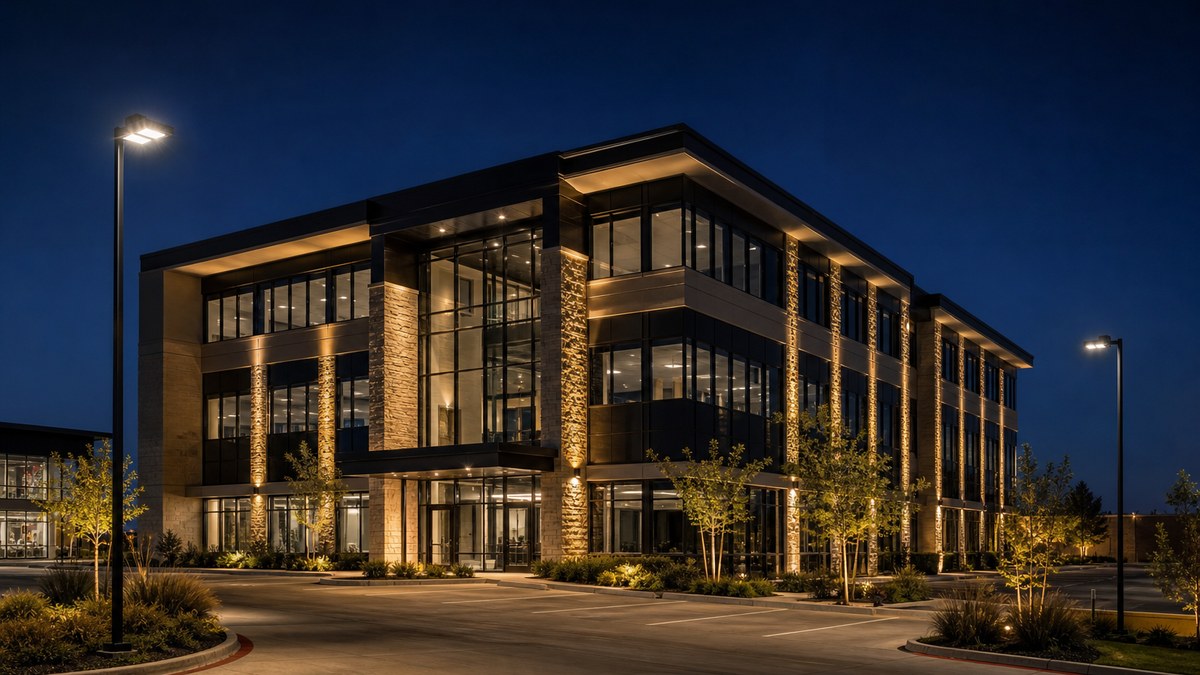
A local lighting company knows the city's permit process, the Oncor service territory, the summer heat that stresses outdoor fixtures, and the event schedules that make some properties impossible to work on during game days and conventions. It can also get back to your site quickly when something needs attention. Arlington LED Lights serves Arlington and the surrounding DFW cities, including South Arlington, Pantego and Mansfield, Grand Prairie, Fort Worth, Irving and Dallas.
How Arlington LED Lights works with you
We are a commercial and architectural LED lighting company focused on Arlington and the metroplex. Our services cover commercial LED retrofits and new installs, architectural and facade lighting, LED video walls, LED signage, lighting controls, and repair and service. Every project starts with a conversation and a site walk, and every job is quoted as a project-specific proposal with a clear scope. You get one point of contact from design through closeout, and a team that is still here after the install.
Frequently Asked Questions
How do I choose a commercial LED lighting company in Arlington?
What is the difference between an LED lighting company and an electrician?
Does a lighting installer need a license in Texas?
Do I need a permit for a commercial LED lighting upgrade in Arlington?
What does DLC listed mean?
Should an LED lighting company visit my site before quoting?
How much does it cost to hire a commercial LED lighting company?
Can an LED lighting company help with Oncor incentives?
What support should I expect after installation?
Does Arlington LED Lights work outside Arlington?
Talk to an Arlington LED lighting specialist
Request a consultation and we will follow up to discuss your building, your goals and your timeline.
Related
Our DFW lighting network: Dallas LED video walls and commercial lighting, Fort Worth LED lighting, Irving LED lighting, Plano LED lighting, statewide Texas LED lighting, wholesale LED components, LED signs and message centers, fiber optic starlight ceilings, 360° fiber optic lighting, pool and water feature lighting, modular building solutions, and Dallas modular structures. Browse more guides on our blog.