Commercial Lighting Controls in Arlington, TX: A Guide to Sensors, Dimming, DALI, DMX & Energy Code
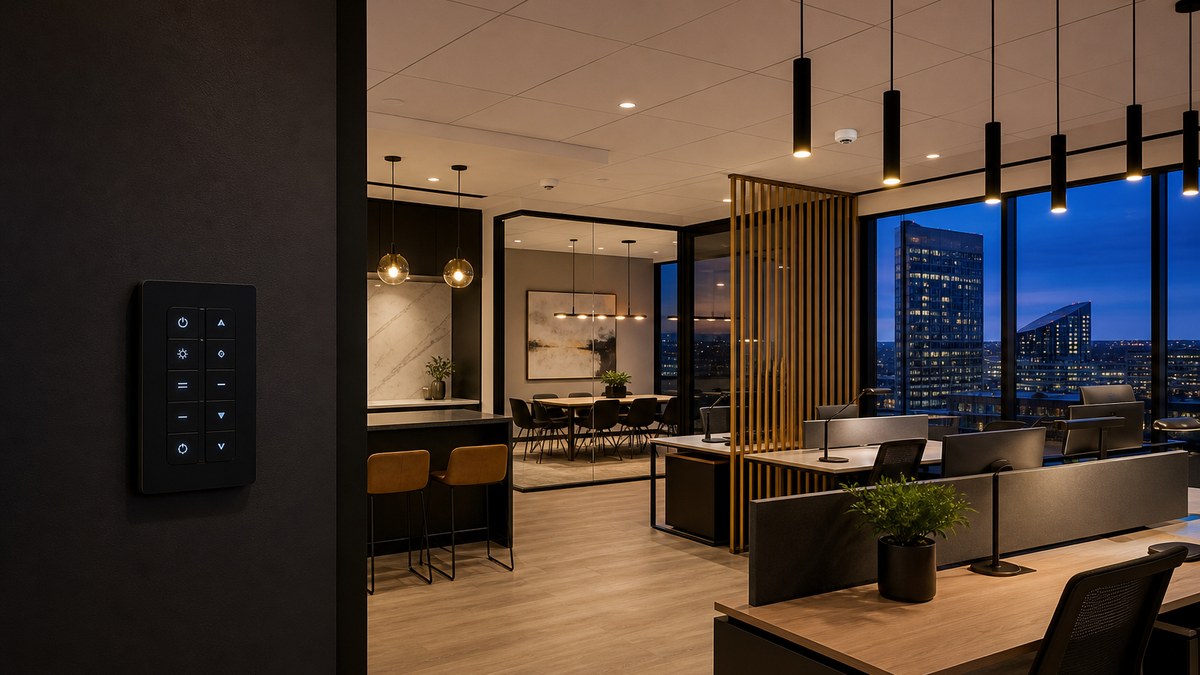
Commercial lighting controls in Arlington decide how well an LED system actually performs once the installers leave. Sensors, timers, dimmers, daylight harvesting and networked control platforms turn lights on when people need them, dim them when daylight is available, and shut them off when a space is empty. Done well, controls are invisible: the lobby glows at the right level at dusk, the warehouse aisle lights up as a forklift turns in, and the parking lot steps down after closing. Done poorly, they become the reason staff tape over sensors and leave every light on.
This guide explains the main types of lighting controls for commercial buildings, how energy code requirements shape what you must install, the differences between 0-10V, DALI, DMX and wireless networked systems, and how to decide between a simple retrofit and a fully networked platform. Whether you manage an office near UT Arlington, a warehouse in the Great Southwest industrial area, a hotel near the Entertainment District, or a church in South Arlington, you will know what to ask for before you request a proposal.
Commercial lighting controls are the devices and software that switch, dim and schedule a building's lights automatically.
- Core controls: occupancy and vacancy sensors, time schedules, dimming, daylight-responsive photosensors and manual switches
- Energy code: new construction and many major alterations must meet the lighting control rules in the adopted energy code; confirm the edition with the City of Arlington
- Protocols: 0-10V for simple dimming, DALI-2 for addressable fixture-level control, DMX for color-changing architectural and facade lighting
- Networked controls add central scheduling, remote access and reporting; luminaire-level controls put a sensor in every fixture
- Retrofits: wireless sensors and controls can often be added during an LED upgrade without opening walls
- Pricing: every controls package is quoted as a project-specific proposal
What lighting controls actually do
LED fixtures already use far less energy than the fluorescent, metal halide and halogen lights they replace. Controls address the other half of the equation: how many hours those fixtures run and at what output. Every hour a light is off or dimmed in an empty room is energy and fixture life you keep. Controls also make spaces work better for the people in them, letting a conference room switch between presentation and meeting modes or a restaurant dim smoothly from lunch service to dinner.
Most commercial control strategies fall into five groups:
- Occupancy-based control: sensors turn lighting on when someone enters and off or down after the space empties
- Time-based control: schedules and astronomical time clocks switch lighting by time of day, day of week and sunrise or sunset
- Daylight-responsive control: photosensors dim fixtures near windows and skylights when natural light is available
- Task tuning and dimming: setting fixtures to the level a space actually needs rather than full output
- Scene and color control: preset looks for event spaces, worship, hospitality and architectural lighting, often with color-changing fixtures
Occupancy vs vacancy sensors
An occupancy sensor turns lights on automatically when it detects someone and off after a delay. A vacancy sensor requires someone to press a switch to turn lights on, but still turns them off automatically. Vacancy mode often saves more in private offices and conference rooms because the lights stay off when daylight is enough. Many codes also allow or require automatic-on to only partial output so a room is not blasted to full brightness every time someone walks by.
Sensor technologies
- Passive infrared (PIR): detects body heat moving across zones; good for line-of-sight spaces like offices and corridors
- Ultrasonic: detects motion from sound waves; better around partitions and in restrooms
- Dual technology: combines PIR and ultrasonic or microwave to reduce false offs in classrooms, open offices and storage rooms
- High-bay and outdoor sensors: fixture-mounted sensors with lenses designed for warehouse aisles, gyms, parking lots and garages
Arlington energy code and lighting control requirements
Lighting controls are not just a nice upgrade on many projects. The energy code sets mandatory control requirements for new commercial buildings, additions and many alterations that replace a significant portion of a lighting system. In Texas, the State Energy Conservation Office sets the statewide minimum commercial energy code, and cities may adopt newer editions locally. The City of Arlington adopted the 2021 family of International Codes with permit applications required to comply starting January 1, 2023, along with the 2020 National Electrical Code. Because local amendments and the exact edition applied to your permit matter, always confirm current requirements with Arlington Building Inspections before you design.
Recent editions of the International Energy Conservation Code (IECC) build on the same core ideas, with each edition tightening the details:
| Control requirement | What it means in practice | Typical spaces |
|---|---|---|
| Manual control in each space | Occupants can turn lighting off, and often on, with a readily accessible control | Nearly all interior spaces |
| Occupant sensor control | Lights turn off or down automatically after the space empties; older editions allowed up to 30 minutes, newer editions such as the 2024 IECC require off within 20 minutes | Offices, conference rooms, classrooms, restrooms, storage, break rooms |
| Partial-on / partial-off | Automatic-on to no more than half power where required; open areas, warehouses and garages step down rather than staying at full output when empty | Open offices, corridors, warehouses, parking garages |
| Time-switch control | Spaces without occupant sensors are scheduled off; the 2024 IECC requires lighting off at least 12 hours in any 24-hour period, with override | Lobbies, retail sales floors, large open areas |
| Light reduction / dimming | Lighting can be reduced from full output; newer editions call for continuous dimming to 10 percent or lower plus off | Offices, classrooms, meeting spaces |
| Daylight-responsive control | Fixtures in sidelit and toplit zones dim automatically when daylight is available, with exceptions for small zones | Perimeter offices, lobbies, warehouses with skylights |
| Exterior lighting control | Off during daylight by photocell or astronomical time clock, with reduced output late at night | Parking lots, facades, building-mounted and site lighting |
| Functional testing | Controls must be tested to confirm sensors, schedules and daylight settings work as designed | New construction and qualifying alterations |
Code language differs by edition and by local amendment, and some spaces, such as egress paths, emergency lighting and security lighting, have specific exceptions. Treat the table as a planning overview, not a code determination. Your design team and the city make the final call.
When does a retrofit trigger code?
A simple lamp-for-lamp swap often does not trigger new control requirements, while replacing fixtures across a large share of a space, rewiring circuits, or doing a full renovation often does. Thresholds vary by edition. On an Arlington project we review the scope with the permit path in mind so the controls package matches what inspection will look for, rather than discovering a missing sensor at final. Our guide to lighting installation in Arlington covers permits and inspections in more detail.
Control protocols explained: 0-10V, DALI, DMX and wireless
The protocol is the language a control uses to talk to the LED driver inside each fixture. It determines what you can control, how flexible the system is when spaces change, and how much wiring the job needs.
0-10V dimming
0-10V is the most common commercial dimming method in North America. Two low-voltage wires run from a dimmer or controller to the fixture drivers, and the voltage level sets the light output. It is simple, widely supported and well understood by electricians. The trade-off is that everything on a 0-10V circuit dims together. You cannot address one fixture without separate wiring, and the system cannot report status back.
DALI and DALI-2
DALI (Digital Addressable Lighting Interface) is a digital, two-way protocol in which each driver has its own address on a shared bus. One pair of control wires can carry commands to many individually controllable fixtures, and those fixtures can be regrouped in software when a floor plan changes. DALI-2 is the newer, certified version of the standard, which adds tighter interoperability testing between manufacturers and standardized sensors and push-button devices. DALI fits offices, healthcare, education and hospitality spaces where flexibility and fixture-level control matter.
DMX512 and Art-Net
DMX512 comes from theater and stage lighting. It sends fast, continuous data for many channels, which makes it ideal for color-changing RGB and RGBW fixtures, pixel-mapped facades, dynamic effects and show control. RDM adds two-way device management, and Art-Net or sACN carry DMX data over Ethernet for large installations. In Arlington, DMX is the right choice for architectural and facade lighting, event venues, sports bars, worship stages and anywhere the lighting is part of the experience.
Wireless and networked platforms
Many current control systems use wireless mesh networks in which sensors, switches and fixture controllers communicate without new control wiring. This is a major advantage for retrofits in occupied buildings, because sensors can be added to existing ceilings with minimal disruption. Networked systems add a gateway and software for central scheduling, remote changes, energy reporting and integration with a building automation system.
| Protocol | Strengths | Limitations | Best fit |
|---|---|---|---|
| 0-10V | Simple, common, easy to service | Group-level only, no feedback | Basic dimming in offices, retail, warehouses |
| DALI-2 | Fixture-level addressing, two-way status, easy regrouping | Needs compatible drivers and commissioning | Offices, healthcare, education, hotels |
| DMX512 / Art-Net | Fast color and effects control for many channels | Specialized programming; not designed for code-driven occupancy control | Facades, venues, worship, entertainment |
| Wireless networked | Minimal rewiring, remote access, reporting | Requires good network planning and setup | Retrofits, multi-site portfolios, warehouses |
Lighting controls by building type in Arlington
Offices and corporate campuses
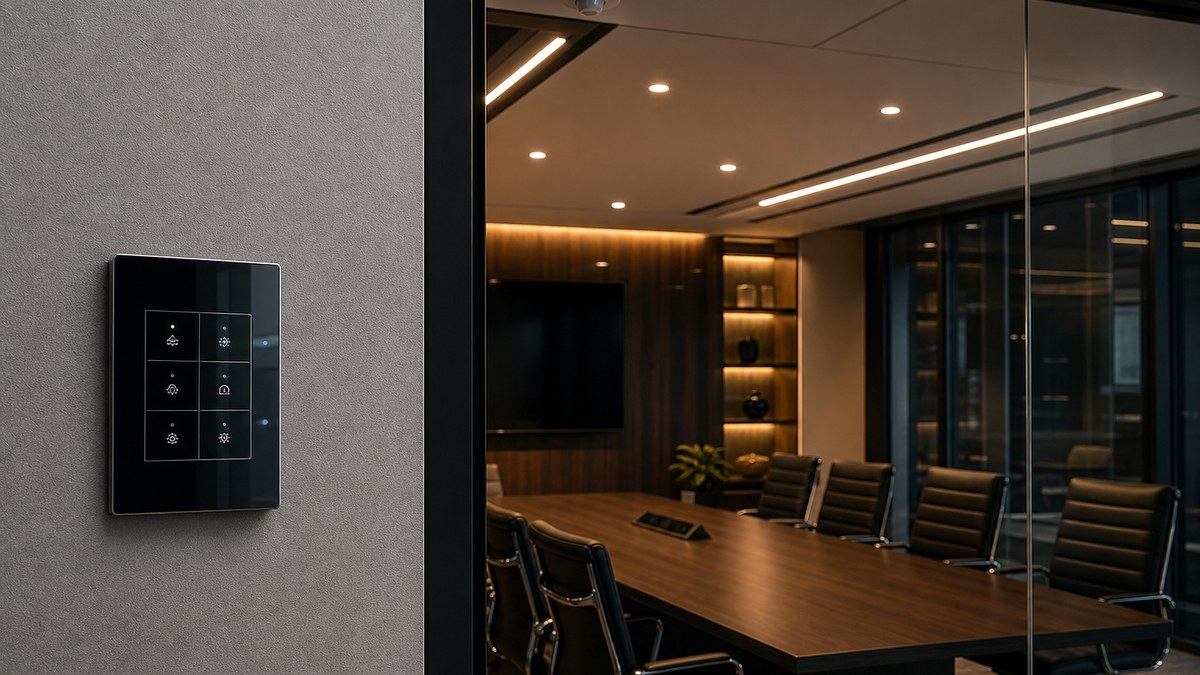
Offices are the classic controls application: vacancy sensors in private offices and conference rooms, partial-off in open areas, daylight dimming along windows, and scene keypads for meeting rooms. Networked systems let facility managers change schedules when occupancy patterns shift, such as hybrid work weeks, without rewiring. See our business lighting services guide for how controls fit into a full office upgrade.
Warehouses, distribution and industrial
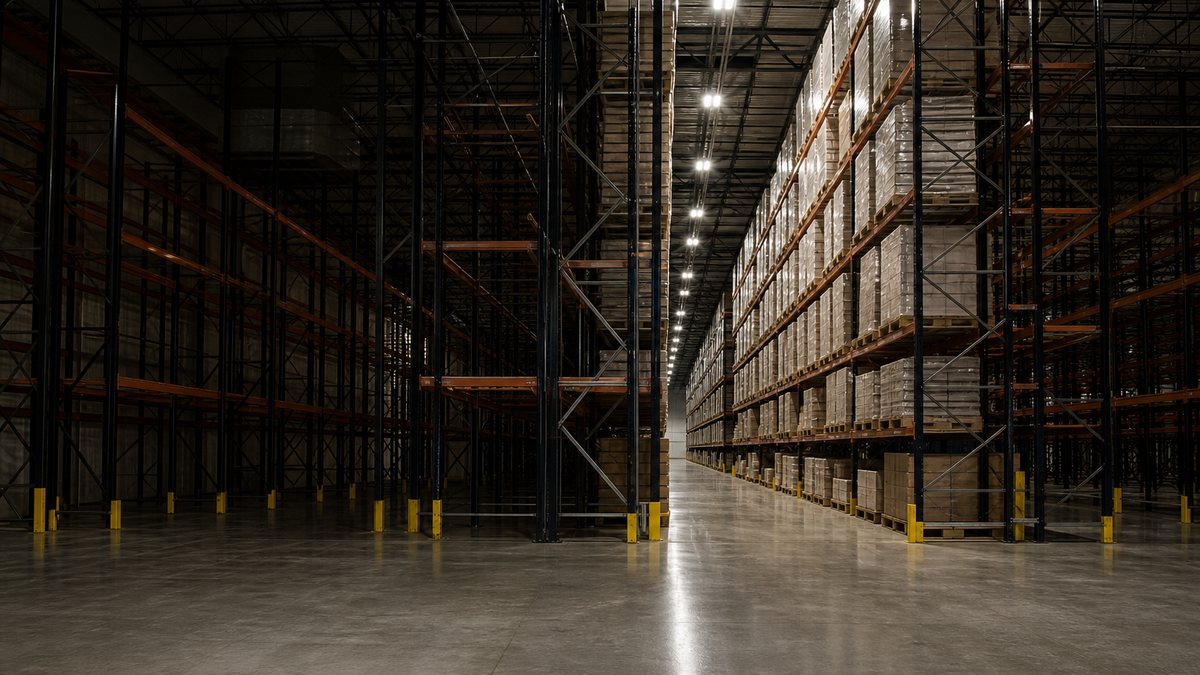
Arlington's Great Southwest industrial area and the I-20 corridor are full of large buildings with tall ceilings and long aisles that sit empty for much of the shift. High-bay fixtures with integrated sensors can step down to a low level in unused aisles and ramp up as soon as someone enters. Daylight sensors near skylights and dock doors add further savings. Because LEDs reach full brightness instantly, unlike metal halide, aggressive sensor control is practical. Our commercial LED lighting buyer's guide covers warehouse fixture selection.
Retail and shopping centers
Retail sales floors usually run on schedules tied to store hours, with accent lighting on separate zones and after-hours security levels. Exterior lots and canopies use photocells and time clocks, often stepping down late at night. Our shopping center LED lighting guide explains parking lot and canopy control strategies.
Hotels, restaurants and the Entertainment District
Hospitality spaces near AT&T Stadium, Globe Life Field, Texas Live! and the Arlington Convention Center depend on atmosphere. Ballrooms need presets for banquets, presentations and dancing; restaurants need smooth dimming through the day; guest corridors and back-of-house spaces benefit from sensors. A well-programmed scene system lets staff change the mood with one button instead of a wall of switches. Video displays should be controlled alongside room lighting, as described in our LED video walls guide.
Churches and houses of worship
Sanctuaries often combine house lighting, stage wash, color fixtures and video. A typical approach uses DMX for stage and color lighting, with simple presets for services, rehearsals and events, plus sensors and schedules in classrooms, offices and fellowship halls. Volunteer-friendly touch panels matter more than feature lists.
Schools, gyms and sports facilities
Gyms and athletic fields benefit from controls that switch between practice, game and event levels, and from scheduling that prevents fields from staying lit after use. Our LED sports lighting guide covers lighting levels by class of play.
Parking lots and garages
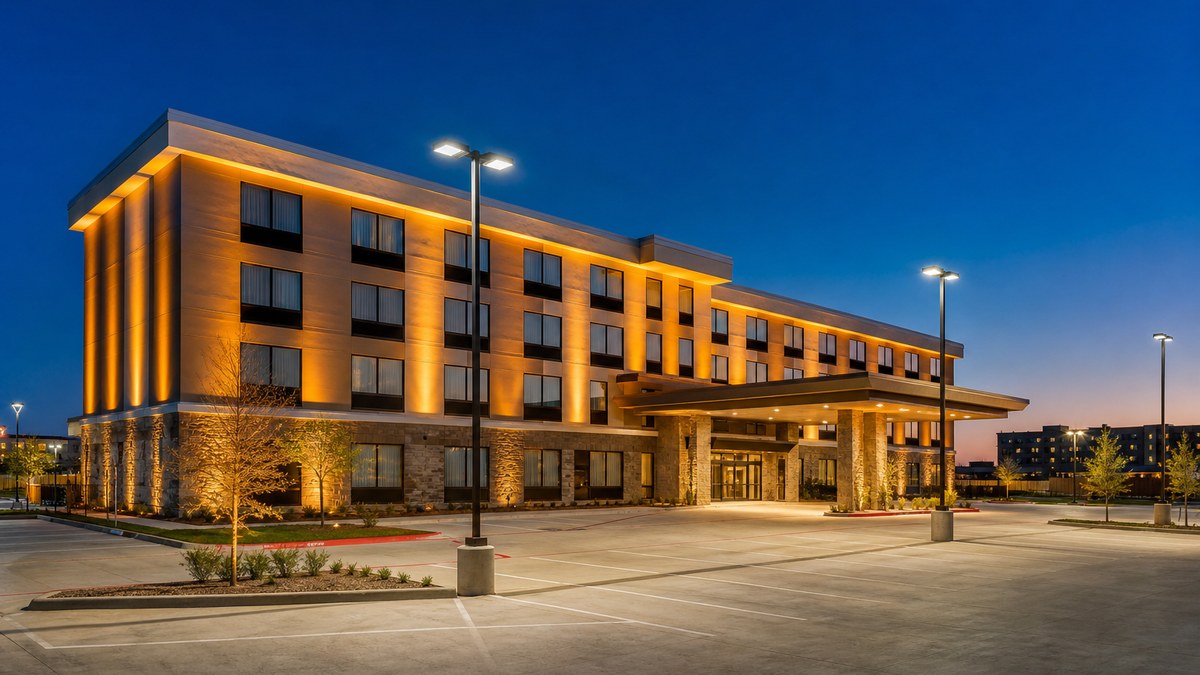
Parking garages are an important controls application because many fixtures run around the clock. Codes generally require garage lighting to reduce output when no activity is detected, and perimeter fixtures near openings may need daylight control. Surface lots use photocells or astronomical time clocks with late-night reduction where allowed.
Planning controls for your building?
Tell us about your spaces, schedules and existing fixtures. We will recommend the right sensors, dimming and control platform and prepare a project-specific proposal.
Retrofit controls vs networked lighting control systems
There is no single right level of control. The best choice depends on how the building is used, how often spaces change, and who will manage the system.
Standalone controls
Standalone sensors, dimmers and time clocks work independently in each room. They are straightforward to install and maintain and satisfy many code requirements. They suit smaller buildings, simple tenant spaces and owners who do not want software to manage. The downside is that changing settings means visiting each device, and there is no central view of what the lights are doing.
Networked lighting controls
Networked lighting controls connect sensors, switches and fixtures into one system with central software. Owners can change schedules from a laptop, see which zones are on, set holiday schedules across a building, and pull energy reports. Many networked systems integrate with building automation, HVAC or security platforms. The DesignLights Consortium maintains a qualified products list for networked lighting controls, and research by NEEA and the DesignLights Consortium across nearly two hundred North American buildings has studied the energy savings these systems deliver.
Luminaire-level lighting control (LLLC)
LLLC puts an occupancy sensor and daylight sensor in every fixture, with each fixture networked to its neighbors. Because each light responds to its own area, open offices and warehouses get fine-grained control without designing separate sensor zones. When the floor plan changes, zones are regrouped in software rather than rewired. LLLC is increasingly common in new LED fixtures and is a strong option for large open spaces.
| Approach | Good for | Management | Flexibility |
|---|---|---|---|
| Standalone sensors and dimmers | Small offices, tenant suites, simple retail | Set at each device | Limited; changes require site visits |
| Room-based control systems | Conference rooms, classrooms, ballrooms | Programmed per room with keypads | Good within each room |
| Networked lighting controls | Multi-floor offices, campuses, multi-site owners | Central software and remote access | High; schedules and zones change in software |
| Luminaire-level lighting control | Open offices, warehouses, large retail | Networked, fixture by fixture | Very high; regroup without rewiring |
How a lighting controls project works
- Site walk and audit. We review each space, how it is used, existing fixtures and drivers, circuits, ceiling types and daylight exposure.
- Code and goals review. We identify which control requirements apply to the scope and what the owner wants beyond code: scenes, remote access, reporting or integration.
- Control narrative. A plain-language description of how every space should behave: when lights turn on, how far they dim, how long the timeouts are, and what overrides exist.
- Design and selection. Sensors, drivers, protocols, keypads and software are chosen and laid out so coverage has no dead spots.
- Proposal. A project-specific proposal covers fixtures, controls, installation, programming and training.
- Installation. Licensed electricians install fixtures, sensors and control wiring or wireless devices, often after hours in occupied buildings.
- Commissioning and functional testing. Sensor sensitivity and timeouts, daylight setpoints, schedules and scenes are programmed and tested against the control narrative.
- Training and handover. Staff learn how to override, adjust and schedule the system, with documentation for future changes.
Ask for a written control narrative before installation. It becomes the yardstick for commissioning and makes it easy for future facility staff to understand why the building behaves the way it does.
Common lighting control mistakes to avoid
- Poor sensor placement. A sensor that cannot see the desk area turns lights off on people who are sitting still. Coverage patterns must match furniture layouts.
- Timeouts set too short. Aggressive timeouts frustrate occupants and lead to sensors being disabled. Balance code limits with how the space is used.
- Mismatched drivers and dimmers. Flicker, drop-out and uneven dimming often come from incompatible components. Drivers and controls should be specified together.
- Skipping commissioning. Out-of-the-box settings rarely match a real building. Unprogrammed daylight sensors and default schedules waste much of the potential benefit.
- Overcomplicating small spaces. A networked platform with every feature is wasted if nobody will log in. Match the system to the people who will run it.
- Forgetting exterior lighting. Parking lots and facades frequently run longer than they need to. Photocells and astronomical time clocks are simple fixes.
- Treating emergency lighting as an afterthought. Egress and emergency lighting must still operate when required, so controls need code-compliant bypass or emergency relays.
Smart, voice and app-based lighting in commercial spaces
Many building owners ask about voice-activated lighting and phone apps. Consumer smart bulbs and voice assistants work well at home, but they are rarely the right foundation for a commercial building, where reliability, code compliance, security and support matter. Commercial platforms can still offer app control, touch screens and integration with conference room systems, and some support voice through building automation. The goal is the convenience people want with the robustness a business needs.
Energy, maintenance and incentive considerations
Controls reduce run hours and output, which commonly means far less energy use on top of the savings from LED fixtures themselves. Lower output and fewer operating hours also reduce heat on LED drivers, which supports long fixture life. Networked systems with energy reporting help owners verify results and spot problems such as a zone stuck on overnight.
Some lighting and controls upgrades in the Oncor service area may qualify for utility incentive programs, depending on program availability and eligibility at the time of the project. Commercial programs typically run on annual cycles and are paid through participating service providers. We help clients check what may apply during the proposal stage. For federal tax questions such as 179D, projects whose construction began before July 1, 2026 may still qualify under earlier rules; confirm with your tax advisor.
Questions to ask before choosing a controls system
- Which code requirements apply to this scope, and how does the design meet each one?
- Which protocol is proposed, and why is it right for these spaces?
- Are drivers, sensors and dimmers tested to work together?
- Who programs and commissions the system, and is functional testing included?
- How will staff change schedules, scenes or timeouts later?
- Does the system need to integrate with building automation, security or AV?
- What warranty and service support cover the controls and the fixtures?
- Is there a written control narrative and as-built documentation at handover?
For more on evaluating contractors, read our guide to choosing a commercial LED lighting company in Arlington.
Why work with Arlington LED Lights
Arlington LED Lights designs and installs commercial LED lighting and controls for Arlington and the DFW metroplex, from single tenant suites to large multi-building sites. Our licensed installation partner has completed over 200 major sports and commercial projects across the US and Canada — NFL, NBA, NHL, MLS, NCAA and NASCAR. We bring 15+ years as an authorized architectural lighting dealer and project coordinator, and we plan fixtures, controls, signage and video as one system. For complete transformations, our Luminance design-build program handles design through installation. We also serve neighboring communities; see our guide for South Arlington, Pantego and Mansfield and our full list of service areas.
Frequently Asked Questions
What are commercial lighting controls?
Are lighting controls required by code in Arlington, TX?
What is the difference between an occupancy sensor and a vacancy sensor?
What is the difference between 0-10V and DALI dimming?
When should a building use DMX lighting control?
Can lighting controls be added to existing LED fixtures?
What are networked lighting controls?
Do lighting controls qualify for Oncor incentives?
How much do commercial lighting controls cost in Arlington?
Do you install lighting controls outside Arlington?
Get smarter lighting in your building
Request a consultation and we will review your spaces, recommend the right controls and prepare a project-specific proposal.
Related
Explore more on our lighting blog or browse all services. Our DFW lighting network: Dallas LED video walls and commercial lighting, Fort Worth LED lighting, Irving LED lighting, Plano LED lighting, statewide Texas LED lighting, wholesale LED components, LED signs and message centers, fiber optic starlight ceilings, 360° fiber optic lighting, modular building solutions, and Dallas modular structures.