Parking Lot & Parking Garage LED Lighting in Arlington, TX: A Guide to Safety, Light Levels, Controls & Upgrades
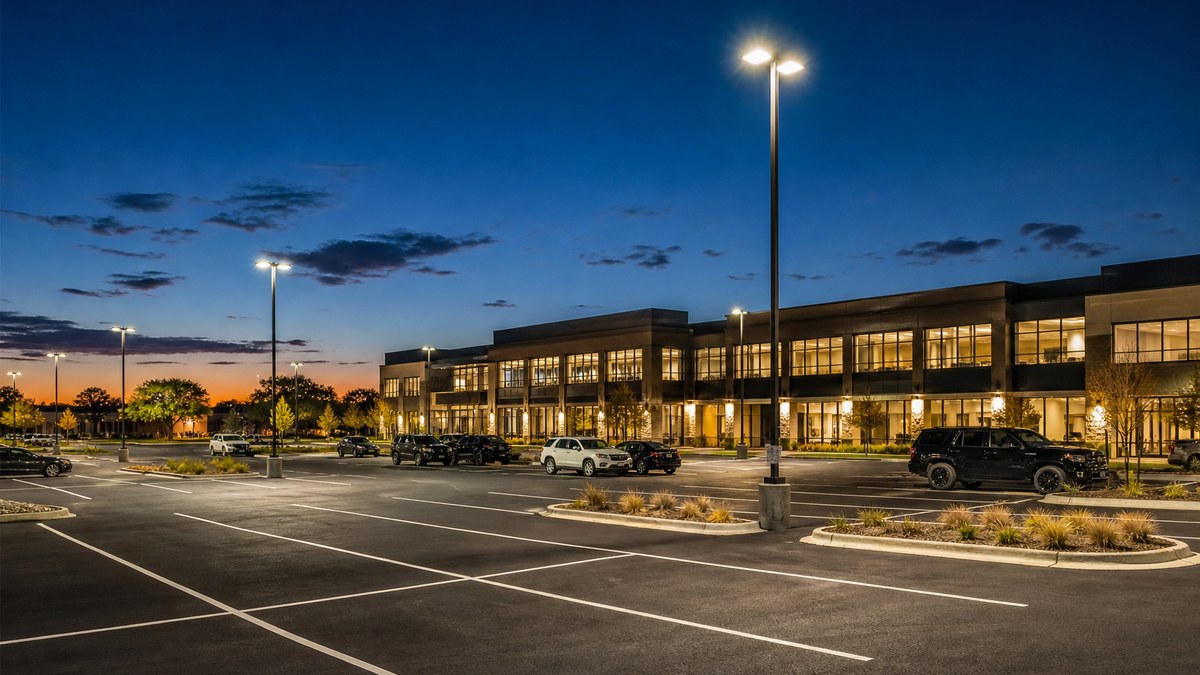
Parking lot and parking garage LED lighting in Arlington, TX is the first and last impression of almost every commercial property. Before a guest walks into a hotel, a shopper reaches a storefront, a tenant gets to the office elevator or a fan heads toward the Entertainment District, they cross a parking lot or a parking structure. If that space is dim, patchy or glaring, people feel it right away: they hurry, they look over their shoulder, they struggle to find their car, and they remember the property for the wrong reasons.
This guide explains how modern LED lighting works in surface lots and parking garages, what light levels and uniformity are commonly recommended, how shielding and color temperature affect safety and neighbors, how energy code controls apply, what to check on an existing system, and how an upgrade runs from night survey to final aiming. It is written for property managers, owners, HOA and apartment managers, hotel operators, churches, schools, medical offices, retail centers and facility teams across Arlington, Grand Prairie, Mansfield, Pantego and the wider DFW area.
Good parking lot and garage lighting is about even, glare-free light, not just bright light:
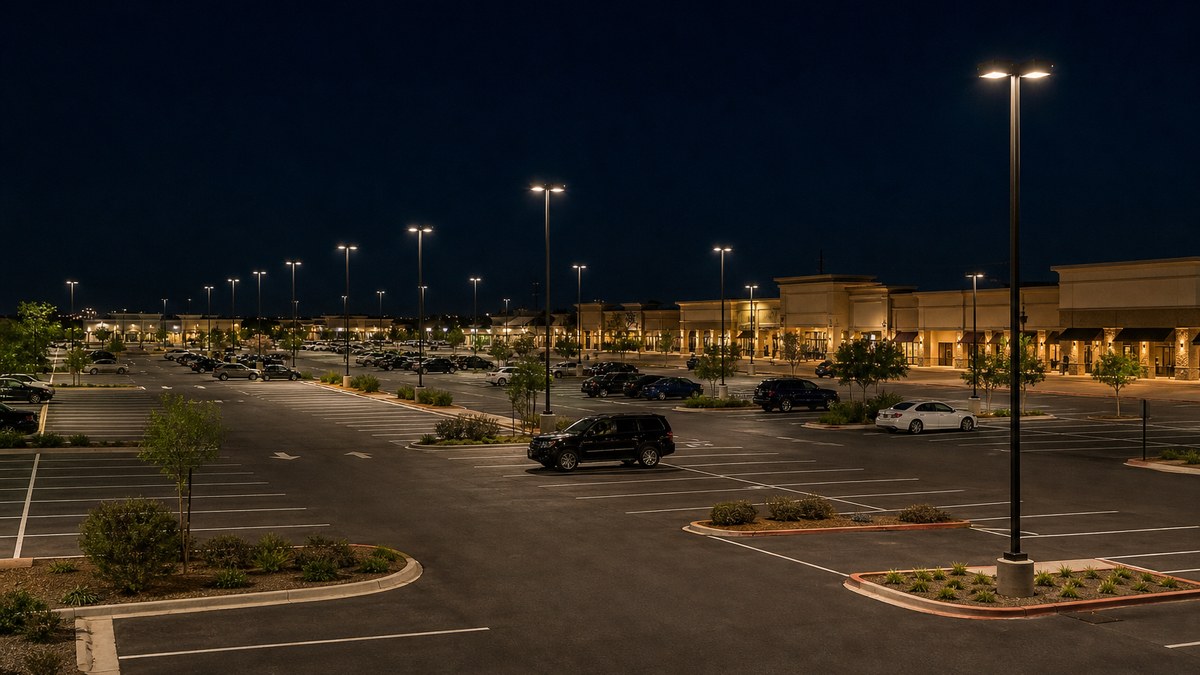
- Surface lots: shielded LED pole and area lights, commonly designed to IES guidance of about 0.2 fc minimum horizontal with a max:min ratio of 20:1 or better, and higher levels for enhanced-security lots
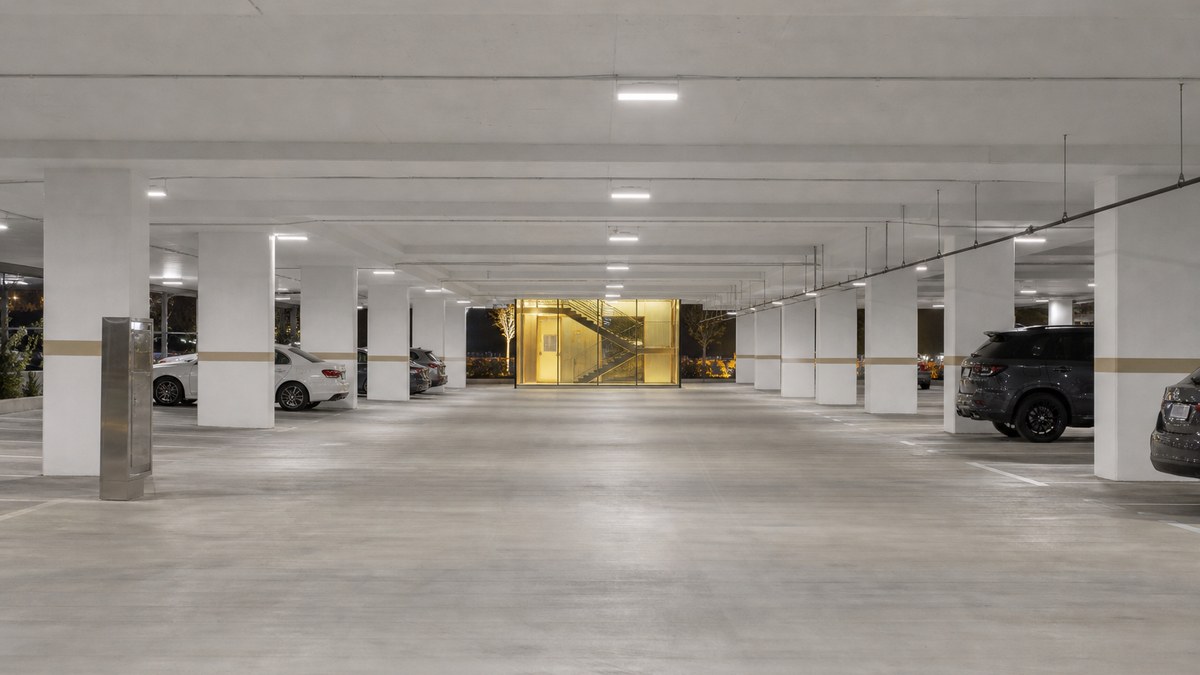
- Parking garages: low-profile LED garage fixtures with good vertical light on faces and car sides, brighter entrances during the day, and well-lit stairs and elevator lobbies
- Uniformity: avoiding dark pockets between poles matters as much as the brightest reading
- Controls: photocells or astronomical time clocks outside, and occupancy-based dimming in garages, as energy codes commonly require
- Neighbors and sky: full-cutoff, well-aimed fixtures cut glare and light trespass
- Pricing: every site is different, so projects are quoted as a project-specific proposal after a site visit and night survey
Why parking lighting matters more than most owners think
Parking areas are one of the few parts of a commercial property that are used at every hour the business is open and often long after. They carry people on foot and vehicles at the same time, they are frequently the darkest part of the site, and they are where people feel most exposed. Lighting is the single biggest factor in whether a lot or garage feels safe and easy to use after dark.
Good parking lighting helps in several ways at once:
- Safety: drivers see pedestrians, curbs, wheel stops, speed bumps and other vehicles. Pedestrians see trip hazards, steps and the path to the door.
- Security: even light lets people recognize faces at a distance and lets security cameras capture usable images. Dark corners and deep shadows are what make a lot feel unsafe.
- Wayfinding: people find their car, the entrance, the stairs and the elevator without guessing.
- Brand and value: a bright, clean, evenly lit lot signals a well-managed property to guests, shoppers and tenants.
- Operating costs: older metal halide, high-pressure sodium and fluorescent fixtures burn for many hours every night. LED commonly uses far less energy and needs far fewer lift trips for relamping.
Many Arlington properties still run original pole lights from when the center or building opened. The heads have yellowed, some lamps are out, others cycle on and off, and the light that remains is concentrated in bright circles under each pole with dark gaps between them. That pattern is exactly what an LED retrofit can fix.
Surface parking lots: poles, heads and layout
Most surface lots are lit with pole-mounted area lights. In an LED upgrade, the main decisions are the fixture head, the optic (distribution), mounting height, pole spacing and whether existing poles and bases can be reused.
Fixture heads and optics
Modern LED area lights use precise optics that shape light into specific patterns. Choosing the right distribution is what turns "bright under the pole" into "even across the lot." Common patterns include Type II for narrow drives and walkways, Type III for poles along the edge of a lot that throw light forward, Type IV for wall-mounted or edge fixtures that push light away from a building, and Type V for poles in the middle of a lot that spread light in all directions. Many projects mix several types on the same site.
Mounting height and spacing
Higher poles spread light farther but can cause more glare and light trespass if the optics are wrong. Lower poles give a more human-scale feel along walkways but need closer spacing. In a retrofit, the existing pole layout is often the biggest constraint. A good lighting layout uses photometric calculations to choose heads and optics that fill the gaps between existing poles, and only adds poles where the dark areas cannot be fixed any other way.
Reusing poles and bases
Where poles, bases, anchor bolts and wiring are in good condition, an LED head retrofit on existing poles is often the least disruptive option. Rusted poles, cracked bases, damaged hand-hole covers or old wiring should be inspected before new heads go up. Pole and base condition is a safety issue as well as a lighting issue, especially in North Texas wind.
Light levels and uniformity: what the guidance says
Parking lighting is usually designed to guidance from the Illuminating Engineering Society (IES), with the parking facility recommendations in IES RP-20 being the most commonly referenced. Values are given in foot-candles (fc). The figures below are commonly cited summaries of that guidance. Your designer should confirm the current edition, the owner's requirements, any lease, franchise or insurance standards, and any local rules.
| Area | Commonly cited target | Why it matters |
|---|---|---|
| Open surface lot (basic) | About 0.2 fc minimum horizontal, max:min uniformity 20:1 or better | Baseline visibility for drivers and pedestrians |
| Enhanced-security surface lot | About 0.5 fc minimum horizontal, max:min 15:1 or better | Better face recognition and camera images |
| Lot entrances, exits, walkways | Often designed brighter than the general lot | Conflict points between cars and people |
| Parking garage, general areas | Higher than surface lots, with a vertical-light requirement on faces and car sides | Enclosed space, low ceilings, more shadows |
| Garage entrances in daytime | Much brighter than interior, to help eyes adjust from sunlight | Drivers can be "blinded" entering from bright daylight |
| Stairs and elevator lobbies | Brighter than drive aisles | Highest foot traffic and trip risk |
Two numbers matter as much as the brightest reading. Uniformity compares the brightest and darkest points: a lot with a very bright spot under each pole and dark gaps between them can have a decent average but poor uniformity, and it will feel unsafe. Vertical illuminance is light on vertical surfaces such as faces, car sides and signs. It is what lets someone recognize a person walking toward them and what gives cameras usable images. Older lots are often designed only for horizontal light on the pavement.
Ask for a photometric plan before you buy fixtures. It shows predicted foot-candle levels across the whole site, including minimums, averages and uniformity ratios, so you can see the dark spots before installation rather than after. After installation, a night walk with a light meter confirms the result.
Parking garages and structures: a different lighting problem
Parking garages have low ceilings, concrete beams, columns, ramps and stairs. Light is blocked and reflected in ways a surface lot never sees. Garage lighting has to deal with all of that while running many hours a day, often around the clock.
- Low-profile garage fixtures: LED garage fixtures are designed to spread light wide and low so it reaches between beams and down drive aisles, with good vertical light on faces and the sides of cars.
- Glare control: fixtures mounted at low ceiling heights sit close to drivers' eyes. Good optics and diffusers keep bright LEDs from glaring into windshields.
- Daytime entrance zones: drivers entering from bright Texas sunlight need extra light inside the entrance so their eyes can adjust. That extra light can be reduced at night.
- Perimeter daylight: open-sided garages get daylight near the edges. Daylight controls can dim fixtures in those zones when there is enough natural light.
- Stairs, elevators and pay stations: these need more light, good vertical light and fixtures that are hard to vandalize.
- Painted surfaces: white or light-colored ceilings and walls reflect more light and make a garage feel brighter. Some security guidance suggests a light-colored stripe at waist height on walls and columns.
- Durability: garages see exhaust, moisture, temperature swings and occasional impacts. Fixtures should be rated for the environment and mounted to avoid tall-vehicle strikes.
Garages at hotels, office buildings, medical centers, apartments and mixed-use developments often run fixtures all day and all night. That makes them some of the strongest candidates for an LED upgrade with occupancy-based dimming, since many areas sit empty for long stretches.
Controls and energy code: photocells, schedules and dimming
Lighting controls are where parking projects save the most energy, and they are also where energy codes have tightened. Texas sets a statewide minimum commercial energy code through the State Energy Conservation Office (SECO), and many cities adopt newer editions locally. Arlington adopted the 2021 International Building Codes; confirm the energy code edition and requirements that apply to your project with Arlington Building Inspections.
Commonly summarized requirements in recent editions of the International Energy Conservation Code (IECC) include:
- Exterior lighting: lights off during daylight, using a photosensor or astronomical time clock, and automatic reduction of lighting late at night or when the business is closed, with exceptions for areas that must stay lit for safety and security.
- Parking garages: automatic reduction of lighting power when a zone has no activity (summaries of the 2021 IECC describe a reduction of at least 30% in garage zones), plus automatic shutoff controls and daylight responsive controls in daylight transition zones and near openings.
- Functional testing: controls must be tested to confirm they work as designed.
For owners, these controls are not just a code box to tick. Dimming a lot to a lower level after the last store closes, while keeping walkways and entrances at a safe level, can cut energy use significantly. Occupancy sensors in garages bring light up the moment a car or person enters a zone. Networked controls can also report failed fixtures, so maintenance teams know about an outage before a tenant complains. Our commercial lighting controls guide covers sensors, dimming and energy code in more detail.
Dark spots, failing poles or an old garage system?
Tell us about your lot or structure. We'll arrange a site visit and night survey, then prepare a project-specific proposal with fixtures, layout and controls designed for your property.
Glare, light trespass and being a good neighbor
More light is not always better. Bright, unshielded fixtures create glare that makes it harder to see, especially for older drivers and people walking toward the light. Poorly aimed fixtures spill light into neighboring homes, apartments and roads, which generates complaints and can conflict with local requirements.
- Full-cutoff fixtures: fixtures that send no light above the horizontal reduce glare and sky glow.
- BUG ratings: IES Backlight-Uplight-Glare (BUG) ratings help compare how much light a fixture sends behind it, upward and at high angles. Lower numbers are better near property lines.
- House-side shields: shields on fixtures near the property line cut the light that would otherwise spill onto neighbors.
- Aiming and tilt: area lights should usually be mounted flat. Tilting heads up to "reach farther" increases glare.
- Color temperature: neutral to warm white, commonly around 3000K to 4000K for parking, gives good visibility and color without the harsh blue cast of very cool LEDs. Many outdoor guides favor 3000K or warmer near homes.
We have not found Arlington-specific outdoor lighting rules for shielding or light trespass published online. Requirements can come from zoning, site plan approvals, planned development conditions, HOA rules or lease terms, so always confirm with the City of Arlington and check your property's own documents before changing fixtures.
Color, cameras and security lighting
Parking lighting and security cameras work together. A camera can only record what the lighting lets it see. LED lighting usually improves camera images compared with older yellow high-pressure sodium lighting because colors look more natural, which helps identify vehicles and clothing.
To get the most from cameras, plan lighting and camera positions together. Light the vertical surfaces cameras need to see, avoid fixtures that shine directly into a camera lens, keep levels even so cameras are not constantly adjusting between very bright and very dark areas, and check how motion-based dimming affects recording. Many security teams set certain areas, such as entrances, pay stations and stairs, to stay at full output while drive aisles dim when empty.
Emergency lighting also matters in garages, stairwells and egress paths. Life safety codes such as NFPA 101 call for emergency lighting that comes on automatically when normal power fails and for regular testing, including a monthly functional test and an annual 90-minute test for battery units. Confirm the requirements for your building with your fire marshal. Our lighting contractor guide covers emergency lighting tests and records.
Signs your parking lighting needs attention
| What you see | Likely cause | Typical fix |
|---|---|---|
| Lights cycling on and off | End-of-life metal halide or sodium lamps, failing ballasts | LED retrofit head or kit |
| Bright circles with dark gaps | Wrong optics, low output, poles too far apart | Photometric redesign with new distributions |
| Lights on during the day | Failed photocell or time clock | New controls; astronomical clock or networked control |
| Yellowed, cloudy lenses | UV aging of old fixtures | Replace heads with LED fixtures |
| Neighbor complaints about glare | Unshielded or tilted fixtures | Full-cutoff heads, shields, re-aiming |
| Garage feels gloomy even with lights on | Low output, dirty lenses, dark surfaces | LED garage fixtures, cleaning, lighter paint |
| Rust or cracks at pole bases | Age, moisture, impacts | Structural inspection, base or pole repair |
Who needs better parking lighting in Arlington
Almost every commercial property has parking, but some types feel lighting problems most:
- Retail and shopping centers: evening shoppers and restaurant guests judge the whole center by the lot. Our shopping center LED lighting guide goes deeper on retail centers.
- Hotels and venues near the Entertainment District: guests arrive late, unload luggage and walk to events. Lots and garages near AT&T Stadium, Globe Life Field, Texas Live! and the Arlington Convention Center see heavy event-night traffic.
- Apartments and HOAs: residents use parking at all hours, and lighting is often one of the first items raised in community meetings.
- Medical offices and clinics: patients arrive early and leave late, and older visitors need even, glare-free light.
- Office buildings: employees leaving after dark expect a safe walk to their cars, especially in garages.
- Churches and schools: evening services, events and games bring crowds to lots that may be lit only for a few hours a week.
- Industrial and distribution sites: truck courts, trailer parking and employee lots in the Great Southwest area run around the clock. See our warehouse and industrial lighting guide.
Retrofit or full replacement: which is right?
There are three common paths for a parking lighting upgrade:
- LED retrofit kits: new LED modules installed inside existing fixture housings. Usually the least disruptive, but only works when housings are in good shape and the existing layout is already reasonable.
- New LED heads on existing poles: the most common choice for surface lots. New heads with modern optics fix uniformity and glare while reusing poles, bases and wiring that are in good condition.
- Full redesign: new poles, relocated bases or added fixtures where the existing layout cannot meet the property's goals, or where the lot is being repaved, restriped or expanded anyway.
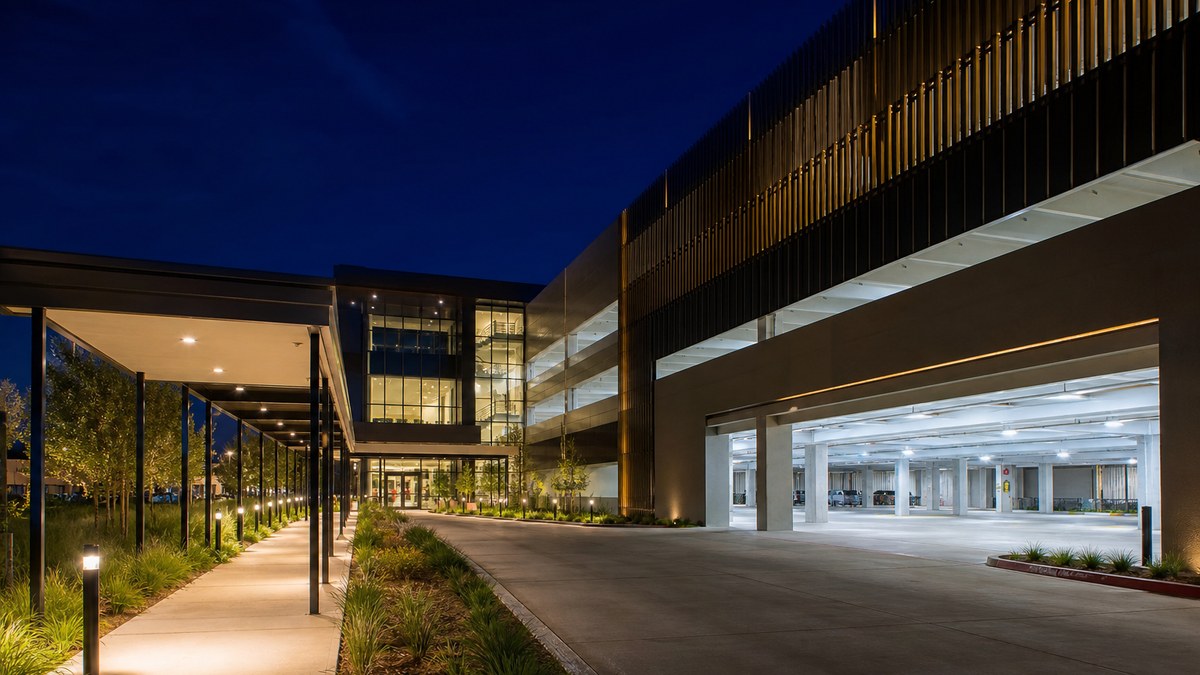
In garages, most projects replace old fluorescent or HID fixtures with purpose-built LED garage fixtures, often with integrated occupancy sensors. Timing an upgrade with repaving, sealcoating, restriping or garage repairs can reduce disruption, since lifts and lane closures are already planned.
Many commercial customers on the Oncor system may qualify for utility incentives on lighting upgrades through Oncor's commercial programs, depending on program availability and the project. For tax questions, such as whether the federal 179D deduction applies, confirm with your tax advisor; 179D ended for projects whose construction begins after June 30, 2026, while earlier projects may still qualify.
How a parking lighting project works with Arlington LED Lights
- Site visit and night survey: we walk the lot or garage after dark, note dark spots, glare, failed fixtures, pole condition and controls, and take light readings where useful.
- Goals: we talk through hours, security concerns, cameras, neighbors, tenant or franchise standards and budget priorities.
- Photometric layout: fixture types, optics, mounting heights and controls are modeled across the site to show predicted levels and uniformity.
- Project-specific proposal: a clear scope with options, including whether your project may qualify for utility incentives, depending on program availability.
- Permits and scheduling: many projects need an electrical permit and inspection; we confirm with the City of Arlington and schedule work around traffic, events and business hours.
- Installation: lifts, pole work and fixture installation by licensed electricians, with lanes and areas phased so the property stays open.
- Aiming, programming and verification: controls are set, fixtures are checked at night and levels are verified against the plan.
Our team brings 15+ years as an authorized architectural lighting dealer and project coordinator. Our licensed installation partner has completed over 200 major sports and commercial projects across the US and Canada — NFL, NBA, NHL, MLS, NCAA and NASCAR. For projects that want one team from design through installation, ask about our Luminance design-build program. Read our lighting installation guide for more on how installs run.
Frequently Asked Questions
How many foot-candles does a parking lot need?
Is parking garage lighting different from parking lot lighting?
What color temperature is best for parking lot LED lights?
Can we keep our existing light poles?
Do parking lot lights have to dim at night under energy code?
How can we stop our parking lights from bothering neighbors?
Will LED lighting help our security cameras?
Do we need a permit to upgrade parking lot lighting in Arlington?
How much does a parking lot LED upgrade cost?
Can parking lighting work be done without closing the lot?
Ready for a safer, brighter lot or garage?
From LED pole lights and area lights to parking garage fixtures, security lighting and smart controls, we design, supply and install parking lighting across Arlington and DFW. Request a consultation or call us today.
Related
Explore more: our services overview, the areas we serve, architectural lighting, LED video walls, LED signage, facade lighting, restaurant and bar lighting, church lighting and video, LED signs in Arlington, lighting in South Arlington, Pantego and Mansfield, business lighting services, commercial LED lighting in Texas, large-scale hotel and venue projects, how to choose a lighting company, sports and venue lighting, LED video walls in Arlington, and the full Arlington LED Lights blog.
Our DFW lighting network: Dallas LED video walls and commercial lighting, Fort Worth LED lighting, Irving LED lighting, Plano LED lighting, statewide Texas LED lighting, wholesale LED components, LED signs and message centers, fiber optic starlight ceilings, 360° fiber optic lighting, modular building solutions, and Dallas modular structures.