Office & Commercial Interior LED Lighting in Arlington, TX: A Guide to Light Levels, Troffer Retrofits, Glare, Controls & Medical Suites
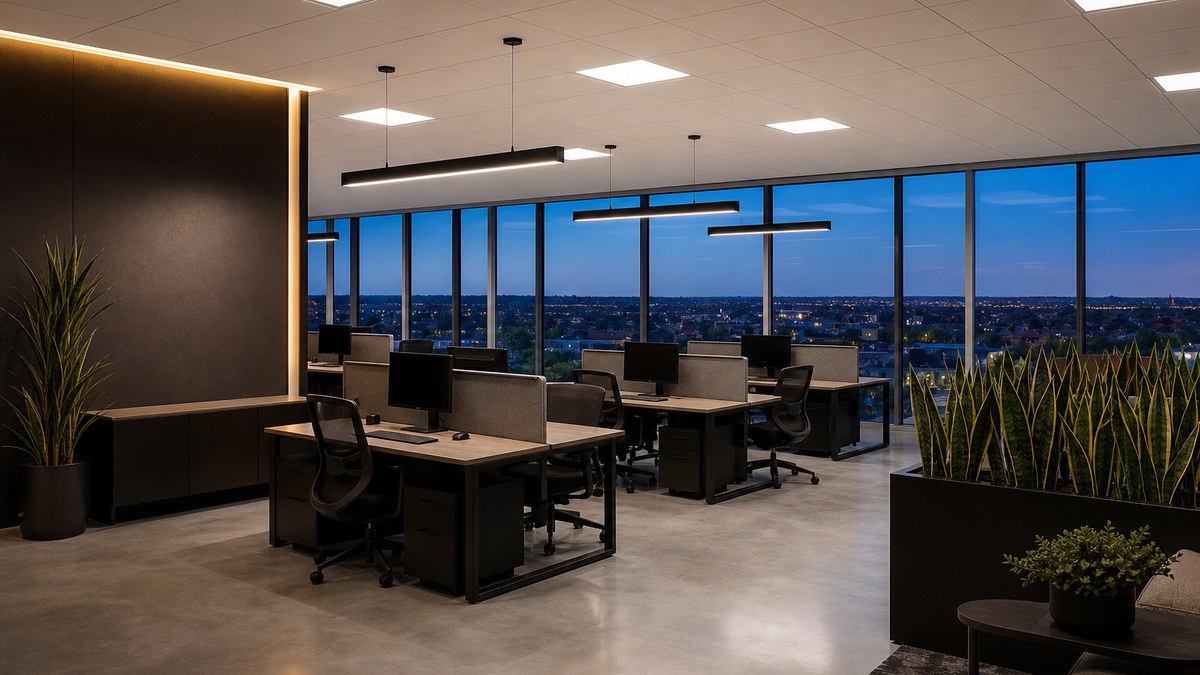
Office and commercial interior LED lighting in Arlington, TX shapes how people feel every working hour. Employees notice it in eye strain at 3 p.m., in glare on their screens and in the dull, buzzing fixture over the copier. Visitors notice it the moment they step into reception. Patients notice it in an exam room. And owners notice it on the utility bill and in how often someone has to get on a ladder to replace a tube that has gone dark.
Across Arlington, a large share of office buildings, medical office buildings, professional suites, flex spaces and multi-tenant buildings still run the 2x4 and 2x2 fluorescent troffers they were built with. Some have been patched with a mix of tubes from different eras, so one room is bluish and the next is yellow. This guide explains how modern LED interior lighting works, what light levels are commonly recommended for each type of space, the real differences between LED tubes, retrofit kits and new fixtures, how to control glare and flicker, which controls the energy code expects, and how an office lighting upgrade runs from walk-through to final punch list. It is written for property managers, building owners, office tenants, medical and dental practices, law and accounting firms, schools and training centers, churches with office wings and facility teams in Arlington, Grand Prairie, Mansfield, Pantego and the wider DFW area.
A good office lighting upgrade is about comfortable, even, glare-free light with smart controls, not just swapping lamps:
- Light levels: open and private offices and conference rooms are commonly designed to about 30–50 foot-candles (300–500 lux), per widely cited IES Handbook tables, with lower levels in corridors and lobbies
- Upgrade path: LED tubes (Type A, B or C), LED retrofit kits that reuse the troffer housing, or new LED fixtures; kits and new fixtures give more control options and a longer-term result
- Comfort: low-glare optics, 3500K–4000K for most work areas, CRI 80+ in offices and CRI 90+ in clinical areas, and low-flicker drivers
- Controls: occupancy sensors, daylight dimming near windows and skylights, and time scheduling, as the energy code commonly requires in new work and major alterations
- Medical suites: brighter, higher-CRI light in exam rooms, softer light in waiting areas
- Pricing: every building is different, so projects are quoted as a project-specific proposal after a walk-through
Why office lighting deserves a real plan
Office lighting is easy to ignore because it is always on. But it runs for many hours a day, five or more days a week, in every room of the building. That makes it one of the few building systems that touches every occupant, every day, and that shows up on the utility bill every month.
A planned LED upgrade helps in several ways at once:
- Comfort and productivity: even, low-glare light reduces eye strain, screen reflections and the "cave" feeling of dim interior offices.
- Consistency: one color temperature and one look across the floor, instead of a patchwork of old and new tubes.
- Lower energy use: LED commonly uses far less energy than fluorescent for the same useful light, and smart controls cut wasted hours in empty rooms.
- Less maintenance: long-life LED sources mean far fewer ballast failures, flickering tubes and service calls.
- Leasing and image: a bright, modern lobby and suite photographs well, shows well and helps a building compete for tenants.
- Future-proofing: the U.S. Department of Energy notes that fluorescent equipment may become challenging or expensive to replace if or when manufacturers decrease fluorescent production.
For most Arlington buildings, the question is not whether to move to LED but how: which spaces first, which upgrade method, which controls, and how to do it without disrupting tenants and patients.
Recommended light levels: what the guidance says
Interior lighting is usually designed to guidance from the Illuminating Engineering Society (IES). Light levels are measured in foot-candles (fc) or lux on the work surface. The figures below are widely cited summaries of IES Handbook recommendations. They are starting points; your designer should confirm the current IES guidance, your tenant's needs and any lease or owner standards.
| Space | Commonly cited target | Design notes |
|---|---|---|
| Open office | 30–50 fc (300–500 lux) | Low-glare panels or linear fixtures; avoid bright spots on screens |
| Private office | 30–50 fc (300–500 lux) | Dimming and vacancy sensors work well |
| Conference room | 30–50 fc (300–500 lux) | Dimmable scenes for presentations and video calls |
| Lobby / reception | 20–30 fc (200–300 lux) | Add accent and wall lighting for a welcoming first impression |
| Corridors | 5–10 fc (50–100 lux) | Even light; good candidates for occupancy-based dimming |
| Break room / lounge | 10–30 fc (100–300 lux) | Warmer color temperature often feels better |
| Restrooms | 10–30 fc (100–300 lux) | Occupancy sensors; good vertical light at mirrors |
| Medical exam rooms | Often cited around 500 lux minimum, up to about 1,000 lux for detailed work | High CRI (90+) for accurate skin tones |
Two things matter as much as the average number. Uniformity means avoiding dark corners and bright hot spots, so eyes are not constantly adjusting. Vertical light on walls and faces makes a room feel bright and open and is what people on video calls see. Many older offices meet the foot-candle number on the desk but still feel dim because the walls and ceiling are dark.
Before choosing fixtures, take a few light-meter readings at desks, in corridors and in conference rooms, and note where people complain about glare or dim spots. Those readings and complaints tell a designer more about what to fix than the fixture count does.
Troffer upgrades: LED tubes vs retrofit kits vs new fixtures
Most office ceilings in Arlington use a suspended grid with 2x4 or 2x2 recessed troffers. There are three main ways to move them to LED. The U.S. Department of Energy's guide on upgrading linear fluorescent fixtures lays out the same three paths, and each has a place.
1. LED tubes (TLEDs)
LED tubes replace fluorescent tubes in the existing fixture. UL recognizes three types:
- Type A ("plug and play"): works with the existing fluorescent ballast and needs no rewiring. It is quick to install, but the old ballast stays in the circuit, so when the ballast fails, the light fails.
- Type B ("ballast bypass"): the ballast is removed and the sockets are rewired for line voltage. It requires an electrician and warning labels on the fixture. The DOE guide describes Type B as carrying the highest safety risk of the options and advises against mixing Type A and Type B tubes in the same building.
- Type C (external driver): the tubes run from a separate low-voltage LED driver. The DOE guide calls it safer than Type B and easier to add controls to.
Tubes are the lightest-touch option, but they keep the old housing, lens and reflector, which may be yellowed, cracked or poorly designed for LED. They rarely fix glare or uneven light.
2. LED retrofit kits
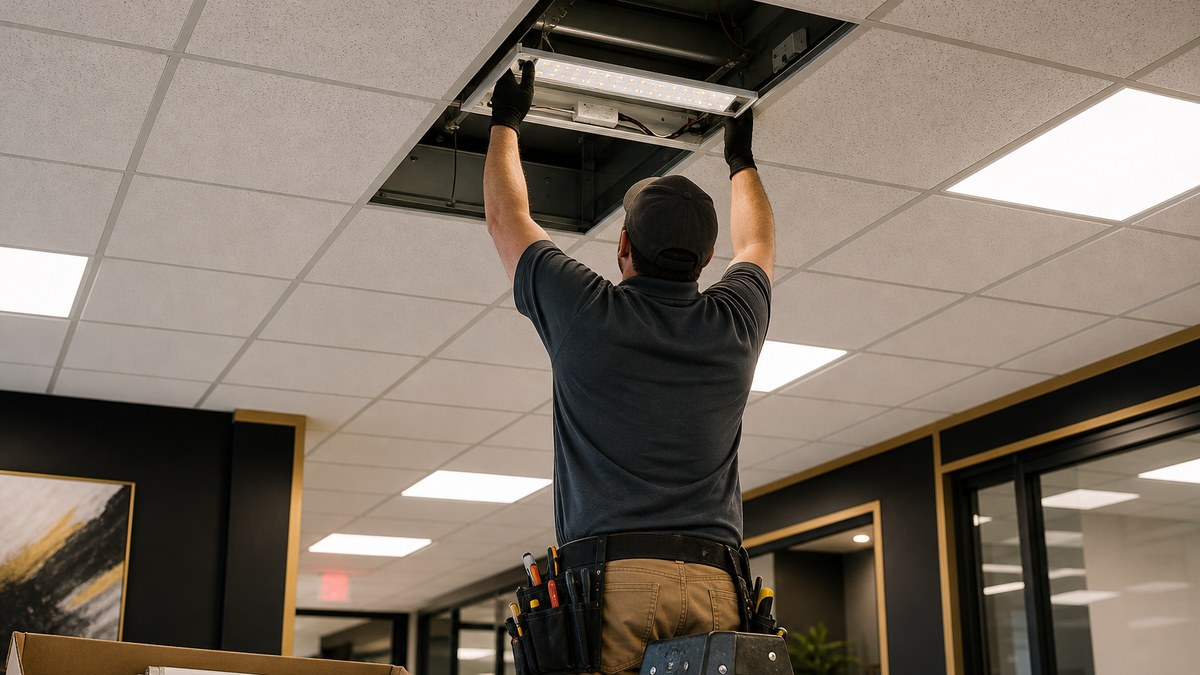
Retrofit kits reuse the existing troffer housing in the ceiling but replace everything inside it: the lamp, ballast, socket and often the lens or door. Many kits install from below without disturbing the ceiling tile or the plenum above. Kits can include dimmable drivers and sensors, so they are a strong option when the housings are sound and the layout works. Look for kits that are UL listed or classified as retrofit kits for the fixture type.
3. New LED fixtures
New LED troffers, flat panels or linear fixtures replace the old fixture entirely. This is the best option when housings are damaged, when the layout or ceiling is changing, during a tenant build-out, or when the owner wants a new look such as linear slots, pendants or direct/indirect fixtures. New fixtures also make it easiest to integrate networked controls.
| Option | Best for | Watch out for |
|---|---|---|
| Type A LED tube | Quick, short-term fixes in sound fixtures | Old ballast stays; limited controls; ballast-compatibility checks |
| Type B LED tube | Removing failing ballasts | Rewiring at line voltage, labeling, never mix with Type A |
| Type C LED tube | Tube look with a dedicated driver | More parts; driver location and access |
| Retrofit kit | Sound housings, existing layout, minimal ceiling disruption | Choose listed kits; confirm fit for each fixture type |
| New LED fixture | Build-outs, damaged housings, new layouts, full controls | More ceiling work; coordinate with tenants and other trades |
Most real projects mix methods. A building might use retrofit kits in the tenant floors, new linear fixtures and accent lighting in the lobby, and new fixtures with sensors in a suite that is being rebuilt anyway. Our lighting installation guide walks through how installs are planned and sequenced.
Fixture types for modern offices
- LED flat panels: slim 2x2 and 2x4 panels that drop into the grid with even, diffuse light. Back-lit panels generally give a more uniform look than edge-lit panels, which can show bright edges.
- Center-basket and volumetric troffers: push light toward walls and ceilings so rooms feel brighter and less cave-like at the same light level.
- Linear slots and pendants: continuous lines of light in open offices, lobbies and collaboration areas; direct/indirect pendants send some light to the ceiling for softer, low-glare light.
- Downlights: for lobbies, corridors, conference rooms and drywall ceilings, often with wall-wash trims to light art and signage.
- Accent and cove lighting: LED tape in coves, behind reception desks and on feature walls adds depth and brand character.
- Under-cabinet and task lighting: for break rooms, workrooms and individual desks, letting general lighting stay lower.
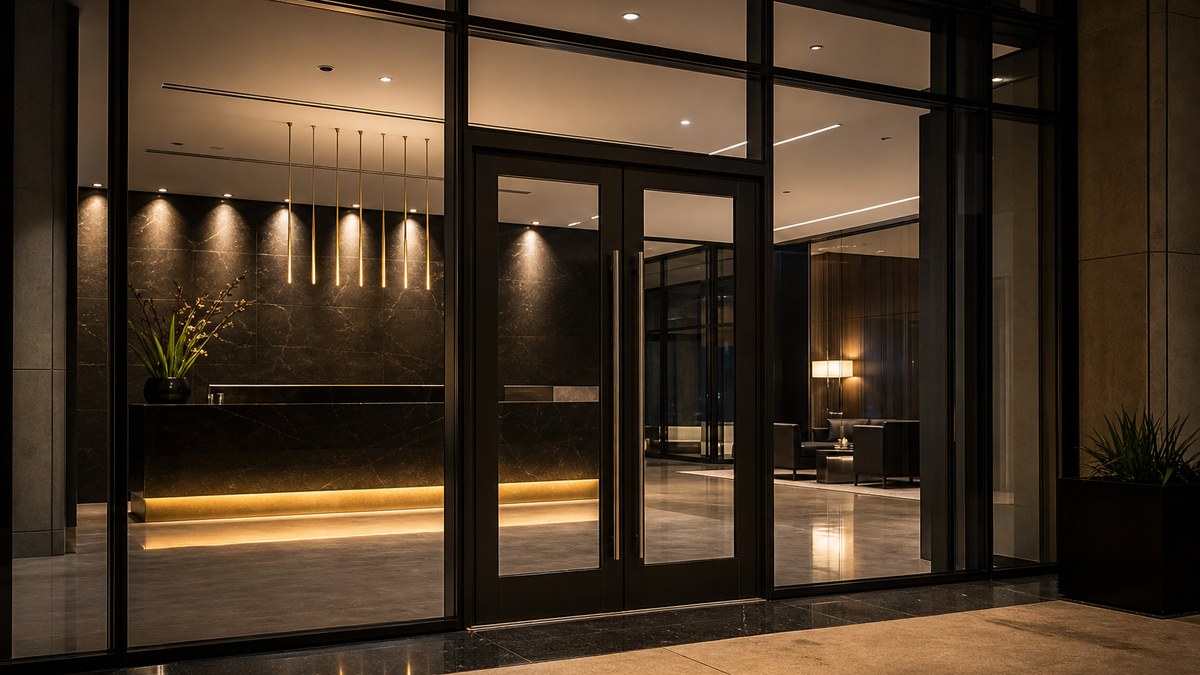
For premium lobbies, the same design principles used in architectural and facade lighting apply indoors: light the walls, highlight materials and use layers instead of one flat ceiling grid. Some lobbies also add an LED video wall for brand content or tenant directories, and a few use fiber optic starlight ceilings for executive suites and lounges.
Glare, color and flicker: the comfort details
Glare
Glare is the number-one complaint in offices that went to LED the cheap way. Bare LED tubes behind clear lenses and poorly diffused panels can be uncomfortable to look at and can reflect off screens. Good office fixtures use diffusers, micro-prismatic lenses or baffles to soften the source. When comparing fixtures, ask for photometric data and glare ratings such as UGR (Unified Glare Rating) where the manufacturer provides them; lower UGR values mean less discomfort glare.
Color temperature
Most offices use 3500K to 4000K: a neutral white that feels clean without being harsh. Lobbies, break rooms and waiting areas often use 3000K to 3500K for a warmer, more hospitable feel. The key is consistency: choose one color temperature per space type and stick to it, so replacement lamps and fixtures do not create mismatched rooms. Tunable-white fixtures, which can shift color temperature during the day, are an option for premium spaces and wellness-focused tenants.
Color rendering (CRI)
CRI describes how accurately light shows colors. CRI 80 or higher is typical for offices. CRI 90 or higher is commonly recommended in medical exam rooms, dental operatories, design studios and anywhere color judgment matters.
Flicker and dimming
Cheap LED drivers can flicker, especially when dimmed. Even flicker people cannot consciously see can cause eye strain and headaches for some occupants, and it shows up as banding on video calls. Specify quality drivers with low flicker, use dimmers that are compatible with the drivers, and test dimming at low levels before signing off. The DOE notes that dimming requires dimmable drivers and compatible dimmers and that some combinations can flicker.
Dim floors, glare or mismatched fluorescent tubes?
Tell us about your building or suite. We'll arrange a walk-through, review your fixtures and controls, and prepare a project-specific proposal for an LED upgrade designed around your tenants and schedule.
Medical offices, dental suites and clinics
Arlington has a large and growing base of medical office buildings, urgent care centers, dental practices, physical therapy clinics and specialty suites. Their lighting needs differ from a standard office:
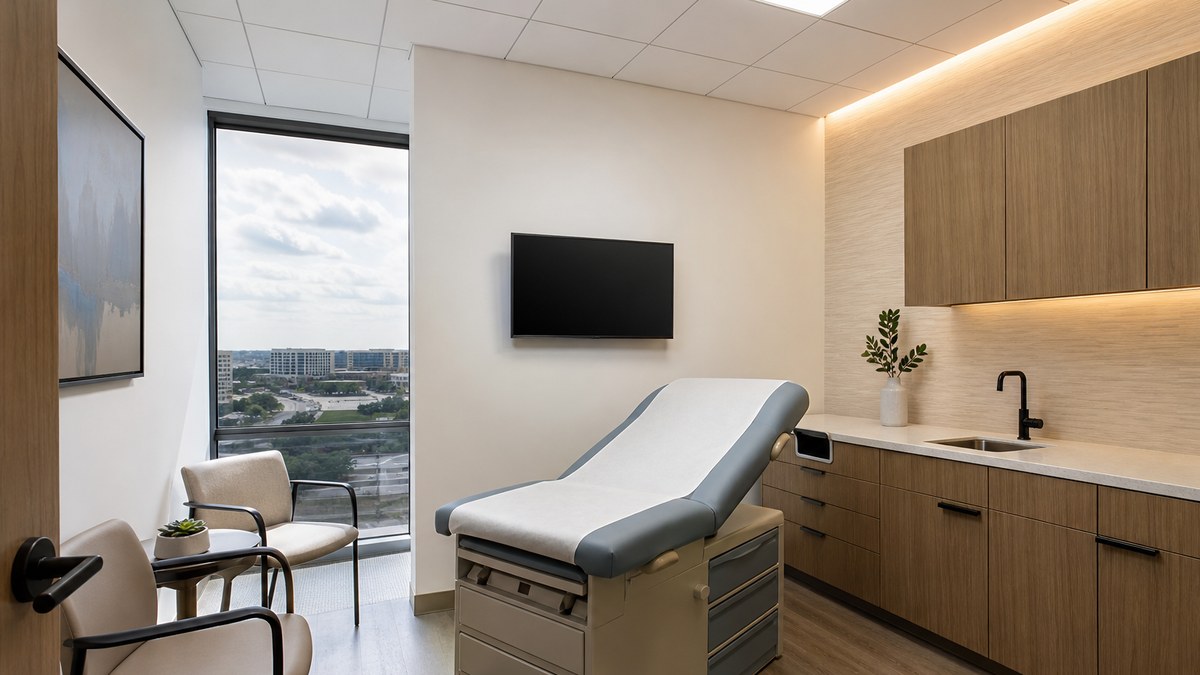
- Exam and treatment rooms: brighter light is commonly recommended, often cited around 500 lux minimum for general examination and up to about 1,000 lux for detailed diagnostic work, with CRI 90+ for accurate skin tones and neutral 4000K white. Dimming lets staff lower light for patient comfort or imaging.
- Waiting rooms and reception: softer, warmer light (around 3000K is a common choice) and wall lighting make patients more comfortable.
- Charting and admin areas: standard office levels with low glare for screen work.
- Corridors: even light with no dark spots for patients with limited mobility, plus code-required emergency lighting.
- Specialty rooms: procedure rooms, labs and imaging suites often have equipment-specific requirements; the practice's equipment vendors and design professionals should set those.
Medical suites also tend to operate on tight schedules, so upgrades are often phased room by room, after hours or on weekends. The large-scale projects guide covers hospital-scale work; this guide focuses on the clinics and practices in Arlington's office buildings and retail centers.
Lighting controls and the energy code
Controls are where an office lighting upgrade does its most important work. LED cuts the energy used per hour; controls cut the hours that lights burn in empty rooms.
- Occupancy and vacancy sensors: turn lights off or down in private offices, conference rooms, restrooms, break rooms and storage rooms when no one is there.
- Daylight-responsive dimming: fixtures near windows and under skylights dim automatically when daylight is available, keeping light levels steady while using less power.
- Time scheduling: lights in open areas and corridors follow the building's hours, with overrides for late work.
- High-end trim (tuning): setting fixtures to the light level the space actually needs instead of full output.
- Networked or wireless controls: fixture-level sensors and wireless systems avoid running new control wiring through finished ceilings and let facility teams adjust settings later.
Energy codes commonly require these controls in new construction and in many alterations. The Texas statewide commercial minimum has been based on the 2015 International Energy Conservation Code (IECC), and many cities adopt newer editions locally. Arlington's City Council adopted the 2021 International Building Codes and the 2020 National Electrical Code, effective for permit applications from January 1, 2023. Confirm the exact energy code edition and what triggers compliance for your project with Arlington Building Inspections. Our commercial lighting controls guide covers sensors, dimming, DALI and energy code requirements in more detail.
Offices with large windows, skylights or clerestories have free light for much of the day. Daylight sensors in those zones keep the room evenly lit while the fixtures dim back. Shades or glare control on west-facing glass make the daylight usable instead of uncomfortable on North Texas afternoons.
Emergency lighting and exit signs
Any office lighting upgrade is a good time to check emergency lighting. Corridors, stairs, exits and many open areas need code-required emergency lighting and exit signs. Under widely cited NFPA 101 requirements, battery units are commonly tested monthly (a functional test of at least 30 seconds) and annually (a 1.5-hour test), with written records kept for the fire marshal. Options for LED upgrades include emergency battery packs inside selected fixtures, separate emergency units and self-testing units that reduce manual monthly testing. Confirm your building's requirements with the local fire department. Our lighting contractor guide covers emergency lighting maintenance in more detail.
How an office lighting upgrade runs, step by step
- Walk-through and inventory: count fixtures by type and room, note ceiling types, existing controls, emergency lighting, problem areas and tenant schedules.
- Goals and priorities: energy, comfort, appearance, leasing, maintenance or code compliance; which floors or suites come first.
- Design and options: choose the upgrade method for each area (tubes, kits or new fixtures), color temperature, CRI, fixture styles and controls. Where it helps, a lighting layout or photometric study predicts light levels before anything is bought.
- Incentives and paperwork: check whether the project may qualify for utility efficiency programs, such as Oncor's commercial programs, depending on program availability. For tax questions, confirm with your tax advisor.
- Proposal: a project-specific proposal with scope, fixtures, controls and schedule.
- Permits and scheduling: pull any required permits and plan work after hours, on weekends or suite by suite to avoid disrupting tenants and patients.
- Installation: licensed electrical work, careful ceiling handling, cleanup each night and clear communication with building management.
- Commissioning: set sensor timeouts, daylight levels, dimming ranges and schedules; test emergency lighting; walk the floors with the owner.
- Close-out: as-built fixture schedule, control settings, warranty documents and recycling of old lamps and ballasts.
Questions to ask before you hire anyone
- Is the electrical work done under a Texas license? Anyone who performs electrical work in Texas must be licensed, and you can check licenses on the TDLR public search.
- Will you provide a fixture schedule and, where useful, a lighting layout with predicted light levels?
- Which upgrade method do you recommend for each area, and why?
- Are the products listed for their use, and are retrofit kits listed for retrofit installation?
- What are the color temperature, CRI and glare characteristics of the fixtures?
- Are the drivers dimmable and low-flicker, and are they compatible with the controls?
- How will controls be commissioned, and who adjusts them after move-in?
- How will the work be scheduled around tenants, patients and building hours?
- What manufacturer warranties apply, and what does the installation workmanship cover?
Our guide on how to choose a commercial LED lighting company goes deeper on these questions and the red flags to avoid.
Office lighting across Arlington and DFW
Arlington's office and medical space is spread across the whole city: professional buildings along the I-30 and I-20 corridors, offices near UT Arlington and downtown, medical office buildings around the city's hospital campuses, flex and office-warehouse buildings in the Great Southwest area, and suites in retail centers in South Arlington, Pantego and Mansfield. Each has its own ceiling types, schedules and tenant mix, and each benefits from the same basic approach: assess, design, upgrade, control and commission.
Offices often share a building or a site with other spaces that need attention too. Warehouse and flex buildings combine office suites with warehouse and industrial lighting; most office properties also need good parking lot and garage lighting and well-lit building signs. Planning them together usually means one design language, one controls approach and fewer disruptions.
Why Arlington LED Lights
Arlington LED Lights designs and delivers commercial and architectural LED lighting for Arlington and DFW properties. Our licensed installation partner has completed over 200 major sports and commercial projects across the US and Canada — NFL, NBA, NHL, MLS, NCAA and NASCAR. Our team brings 15+ years as an authorized architectural lighting dealer and project coordinator. For owners who want one team from design through installation, ask about our Luminance design-build program, or see our full commercial LED lighting services and repair and service.
Frequently Asked Questions
How many foot-candles does an office need?
Should I use LED tubes or replace my office troffers?
What is the difference between Type A, Type B and Type C LED tubes?
What color temperature is best for office lighting?
How do I reduce glare from LED office lights?
What lighting is recommended for medical exam rooms?
Do I need lighting controls when I upgrade to LED?
Can an office lighting upgrade be done without disrupting tenants?
Are there utility incentives for office LED upgrades in Arlington?
How much does an office LED lighting upgrade cost?
Ready to modernize your office or medical suite?
From troffer retrofits and new LED fixtures to lobby accent lighting, emergency lighting and smart controls, we design, supply and install office and commercial interior lighting across Arlington and DFW. Request a consultation or call us today.
Related
Explore more: our services overview, the areas we serve, architectural lighting, LED video walls, LED signage, restaurant and bar lighting, church lighting and video, commercial LED lighting in Texas, shopping center lighting, sports and venue lighting, and the full Arlington LED Lights blog.
Our DFW lighting network: Dallas LED video walls and commercial lighting, Fort Worth LED lighting, Irving LED lighting, Plano LED lighting, statewide Texas LED lighting, wholesale LED components, LED signs and message centers, 360° fiber optic lighting, modular building solutions, and Dallas modular structures.